Wednesday, July 16, 2014

Psalm 15 "No Shirt, No Shoes, No Service?"

Psalm 15:1-2
O Lord, who shall sojourn in your tent?
    Who shall dwell on your holy hill?
He who walks blamelessly and does what is right
    and speaks truth in his heart...
 

Comments: I always call this “A psalm of Integrity”. Here the psalmist gives voice to the cry of God-seeking—but imperfect—people throughout history, “What do we need to do to live in God's presence?” or, to put it in New Testament terms, “…to be saved?" David gives a detailed list of that kind of person who can approach and be comfortable in a relationship with God. What a practical list of attributes and attitudes this psalm provides! 

As I would sum it up, the person who can dwell in the presence of God:
  •        Walks blamelessly
  •        Does what is right every time
  •        Speaks the truth in his heart (he doesn’t even lie to himself)
  •        Doesn’t slander with his tongue
  •        Does no evil to his neighbor,
  •        Doesn’t betray his friends
  •        Doesn’t look up to vile people
  •        He honors those who honor the Lord;
  •        Keeps his promises even when it hurts
  •        Doesn’t charge interest when helping others (not about what he gets out of it)
  •        Won’t lie, even when he needs the money (never profit over people).

There is just one problem—we don’t add up, neither did David…and he knew it. It was clear to David that his integrity depended on the lovingkindness of the Lord.

So what do we do in that moment of honesty, when we see God as he really is, and ourselves as we really are and feel suddenly under-dressed and disqualified? Such moments come rarely for those who in their pride and self-sufficiency sense no need. For others, feelings of unworthiness and the dirty rags of disgrace are the uniforms of their daily lives.

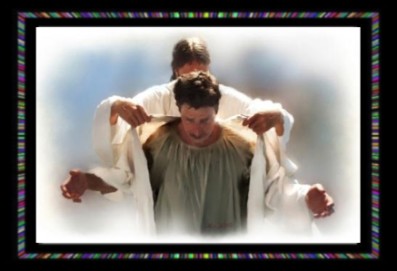
The person this psalm describes as having integrity in all areas of their life is a great example for us, but thankfully we don't have to "earn it" ourselves. We can’t presume to approach God in unrepentant sin. When you go to a wedding you wear wedding clothes (Matthew 22:11-12). Our sin must be dealt with, and our nakedness must be covered. Before the King, there can be no excuses, no explanation, and no argument. What we must do—while it is still today—is admit that we need “a wedding garment” befitting the invitation we have received and to trust Jesus to provide what we need.
I will greatly rejoice in the Lord;
    my soul shall exult in my God,
for he has clothed me with the garments of salvation;
    he has covered me with the robe of righteousness,
as a bridegroom decks himself like a priest with a beautiful headdress,
    and as a bride adorns herself with her jewels.
(Isaiah 61:10)

For us, as Christians, we are made worthy in Christ, not in our own efforts. Yet, if Jesus lives in us we will become more like him in our behavior as well. He came to serve, and such love transforms our hearts. It is Jesus' integrity that covers us, delivers us, gives us victory and enables us to dwell in the presence of a holy God as one who belongs there. 

We can’t hope to stand before the Lord in any kind of self-righteousness, but like the tax collector in Luke 18:9-15 who cried out, 'God, be merciful to me a sinner!' and went home justified. In putting his faith in the mercy of God, his righteousness exceeded that of the Pharisees. What about now? Do we have faith in Jesus' integrity on our behalf?
His divine power has granted to us all things that pertain to life and godliness, through the knowledge of him who called us to his own glory and excellence, by which he has granted to us his precious and very great promises, so that through them you may become partakers of the divine nature, having escaped from the corruption that is in the world because of sinful desire.” (2 Peter 2:3-4)

He gives us not only the needed shirt and shoes but all that we need for life and godliness…his very nature! 


Monday, July 7, 2014

Psalm 14:4-6 "Wise Up!"

Psalm 14:4-6
Have they no knowledge, all the evildoers
    who eat up my people as they eat bread
    and do not call upon the Lord?
There they are in great terror,
    for God is with the generation of the righteous.
You would shame the plans of the poor,
    but the Lord is his refuge.

Comments:
This psalm is part wisdom psalm and partly a lament. There is another almost identical psalm (53) that we will consider later (if I pick up the pace a little). I have always focused on the first two verses that set out the perspectives of the fool who, “says in his heart, ‘There is no God'” (v.1) and that of the Lord who,looks down from heaven on the children of man, to see if there are any who understand, who seek after God.” (v.2)

However, ...today I will ponder v.4-6. It is almost as if the psalmist is beside himself in consternation. I don’t mean the ironic “I could have had a V8!” head-slapping moment, but a deep cry of “Don’t-they-get-it” agony from the heart of his compassionate frustration. They not too metaphorically devour the psalmist’s/God’s people like bread instead of entering into a relationship with the Giver of the Bread from Heaven. They come together only in their corruption…a mocking of relational unity.

It should be noted that “the fool” is not unintelligent, but one who lives as though there was no God who has entered into a covenant relationship of love with the poor. In reading the late Peter Craigie’s rather technical commentary on Psalms I was surprised by this wonderfully affective insight,
“The fool is one whose life is lived without the direction or acknowledgment of God. Thus the precise opposite of fool and folly is not wise man and wisdom; the opposite of folly in the wisdom literature is lovingkindness [hesed]…That is to say, the fool is defined by the absence of lovingkindness…”[1]

There is an extended section that is present in some Greek manuscripts between v. 2 & 3 that is actually quoted in Romans 3:13-18
“Their throat is an open grave;
    they use their tongues to deceive.”
“The venom of asps is under their lips.”
   “Their mouth is full of curses and bitterness.”
“Their feet are swift to shed blood;
    in their paths are ruin and misery,
and the way of peace they have not known.”
 “There is no fear of God before their eyes.”
Such verses only serve to emphasize the lack of hesed (lovingkindness) on the part of the fool. 

So often we tend to direct our thinking about wisdom along the "judging/discerning rightly" track. However, if Craigie is right, then perhaps wisdom is neither easily isolated from the heart’s response to the love of God, nor from the hand of mercy extended to one another!

In Psalm 14:5 we see that the fools’ plans fail to satisfy them, but instead, leave them in a state of terror even as they seek to terrorize others. Why is this? Because they don’t understand that though the righteous poor may be consumed, they are not cowed for the Lord is their refuge. The powerful fool cannot steal the hope of the Lord’s people…and it threatens the fool’s own corrupted worldview. It isn't wise to shame the poor…ever. Not just because God is their defender, but because wise people are full of lovingkindness!

One other comment about unity from this psalm…it makes it clear that we all have gone astray and become corrupt…which means we all need the same mercy of God.
We cannot say that such bad behavior and heart attitudes only apply to “those people” or the out-group de jour. I am reminded of that well-used parental proverb, “When you point the finger at someone else, you are pointing three back at yourself!” It is only because “salvation has come out of Zion” through the costly grace of Jesus Christ, that any of us stray dogs can claim to be the people of God. Paul makes no bones about this for after quoting from this psalm he stated,
For there is no distinction: for all have sinned and fall short of the glory of God, and are justified by his grace as a gift, through the redemption that is in Christ Jesus, whom God put forward as a propitiation by his blood, to be received by faith. (Romans 3:22-25)


[1] Peter C. Craigie, Word Biblical Commentary: Psalms 1-50 (Waco, TX: Word, 1983) 147.

Thursday, June 26, 2014

Psalm 13 “How Long?”

Psalm 13:1a, 3-4 
How long, O Lord? (4x)… 
Consider and answer me, O Lord my God;
    light up my eyes, lest I sleep the sleep of death,
lest my enemy say, “I have prevailed over him,”
    lest my foes rejoice because I am shaken.

Comments:
What is the subject of this psalm? If I was to state it in the form of a question it would be, “How long do I have to wait for an answer from the Lord?” Sometimes we really wonder how long it will take God to answer us and how long we will have to endure seemingly high and dry like a beached boat.

While growing up in an orphanage in El Salvador, Hannah told me that when the kids in the van asked “How much longer?” The standard answer was always, “20 more minutes”—no matter how many times they asked. Didn’t our parents all do something like that? As a result, I have called this either the “Are we there yet?” or the "Kids-on-a-road-trip” psalm since the psalmist asks the Lord “How long…?” four times in rapid succession (v.1-2). But perhaps my semi-flippant title is making light of the deep pain of the psalmist’s lament. Yet the lament is common to the human experience. I know I have asked the Lord the same question more than once in the last couple of weeks. So I in no way want to minimize to the depth of the psalmist’s trauma…this is no impatient passenger but a person facing death and unjust accusations.

In verses 4-5, our focus today, he states why he really needs to know the answer. After the “How long” lament, he again presents his request,
Consider and answer me, O Lord my God;
    light up my eyes, lest I sleep the sleep of death,
lest my enemy say, “I have prevailed over him,”
    lest my foes rejoice because I am shaken.
He neither wants to die nor desires his enemies to get the last word! I am encouraged that he didn't stop presenting his needs to the LordThen in the last two verses (v.5-6), he states what he has done in the past "trusted" and what he will do in the future "rejoice."

Why this sudden change of heart on the psalmist’s part? What is it that lights up his eyes? Like a bit of honey on the tongue of a famished warrior (1 Samuel 14:27), he finds something that renews his hope and strength to persevere. This is a fairly common occurrence in the psalms.
·         Have his circumstances changed? No.
·         Has his perspective changed? Yes.
He has stated his need clearly to the Lord and seems to pause to remember how God has dealt with him in the past bountifully in steadfast love and salvation.

Clocks on Canary Warf, London
So has the psalmist come to realize that the answer to his repeated “How long?” lament is “As long as it takes”? Or, perhaps, has he come to see that the question has already been answered, even before he called? Because of what God has done in the past he knows that his future is also secure.

Of course, the long-term future view of the Day of the Lord addresses his concerns as well, for Isaiah prophesied,
He will swallow up death forever;
and the Lord God will wipe away tears from all faces,
    and the reproach of his people he will take away from all the earth,
    for the Lord has spoken.
It will be said on that day,
    “Behold, this is our God; we have waited for him, that he might save us.
    This is the Lord; we have waited for him;
    let us be glad and rejoice in his salvation.”
(Isaiah 25:8-9)


Woman Waiting
The mouths of our enemies will not get the last laugh.
We are not like that boat beached in the dunes by chance and time. God has a plan to continue to show his steadfast love to us. He will bring his purposes to pass.

So what do we do with our “How longs?”
May the Lord brighten your eyes today!

P.S. I know some of you might have been asking “How long until Greg posts another Psalms blog?” Well, you too now have an answer!

Tuesday, June 10, 2014

Psalm 12 "Longing for Safety"

Psalm 12:1, 5 
Save, O Lord, for the godly one is gone;
    for the faithful have vanished from among the children of man…

 “Because the poor are plundered, because the needy groan,
    I will now arise,” says the Lord;
    “I will place him in the safety for which he longs.”

Comments:
This psalm is an individual lament as we can see in verse one’s prayerful request, “Save, O Lord”. It also contains a bit of imprecatory (v. 3) and a pinch of wisdom (v.6).

The larger context of the psalm indicates that when David wrote this, he was frustrated by the lying and treacherous words of his generation. It seemed like everyone had become corrupt in their speech. It is not much different today…check the comment thread on any sports or political post you find on the internet. People still use their power and wealth to oppress and disrespect others based on race, class, religion, and culture covering their actions with lying words. And many who have no power would treat others just as oppressively if they did.

Yet here in v, 5 we have the answer to David’s cry for help (v.1). The Lord rises up to deliver and save the poor/needy who are groaning because of the plundering that they are suffering. In the Old Testament “the poor” is the godly person who trusts in the Lord instead of in himself and worldly power structures. These were the “have-nots” of society that what little they had was being taken by those with more. They were being terrorized in a very real way.

Is it satisfying to see the Lord’s answer? He will move and “place” the poor/needy one who is trusting in Him “in the safety for which he longs.” I think so.

This was a verse that I got to share with my son as he headed off for a military deployment as a combat medic. This verse instructs me that I need to have a tender heart towards the oppressed wherever I may find them. Why? Because this is the very heart of God! Our military men and women can be self-serving just like anyone else, but they can also do some very brave and sacrificial things in an effort to protect others. Our government may make decisions that are not in the best interest of the poor and needy, but there are many who lay down their lives in sacrificial service to bring them to “the safety for which he longs.”  When they do this for others, they reflect something of the character of God as revealed in Jesus Christ. 

Our calling as Christ followers, is to come alongside those in need, show kindness, build relationship, and walk with them. It may be that we can help them to safety, or that in our risking something for others that we can be helped by what we learn from them. Some in terrible danger long for true safety, others merely loiter in it risking nothing for others. 

In any event, Gods heart is compassionate and responsive to his people, and his words are always true and dependable. So, even when I risk an investment of trust in the Lord he is my Deliverer and I really have risked nothing for he is the one who died for me and even now gives the harvest!

[Note: This psalm marks a memorial stone of sorts. It was on this psalm in January 2010 that in response to requests from readers (like Janet Miller) I began adding short commentary to the verses that I posted on Facebook. Then about a year ago, those comments moved into a more developed blog.]

Wednesday, June 4, 2014

Psalm 11 "Refuge or Fleeing?"

Psalm for Today = 11:1-4
"In the Lord I take refuge;
     how can you say to my soul,
"Flee like a bird to your mountain,
     for behold, the wicked bend the bow;
they have fitted their arrow to the string to shoot in the dark at the upright in heart;
     if the foundations are destroyed, what can the righteous do?"
    The Lord is in his holy temple;
     the Lord’s throne is in heaven

Comments:
This is a psalm of profound trust in the Lord. We need to see that our “refuge” is the place of our greatest trust, our ultimate hope for protection and deliverance from our enemies. In this case the refuge referred to is not a generally trustworthy place like Helm’s Deep (that could be overrun by a powerful enemy) but a faithful, loving, all-powerful, and ever-present person—the Lord himself!

I get the sense that the psalmist was shocked that someone thought that just because it was dangerous he should disengage and flee much the way the U.S. Secret Service agents spirit the American President and Vice President away in the face of imminent threats.

God’s people of both Testaments has been threatened and persecuted many times throughout history, but God has faithfully preserved a faithful remnant. It would seem that having the Lord as his refuge enables/empowers/emboldens the psalmist to stay in right where he was, doing what he had been doing—trusting the Lord.

But what about the fight over "the foundations?" It was not the psalmist that was concerned about the imminent collapse of “the foundations”, but the fearful. There have always been those that think that the best way to deal with the corruption that is in the world today is to retreat from the world and carve out some kind of insular community that would be safe from temptation, pollution, or attack. There are others who think that the best defense is a strong offense and tend to take the lead in any culture war that breaks out. They feel that if they don’t defend “the foundations” that surely they will be destroyed. But our foundation is none other than Christ himself (Psalm 118:22) and he doesn't need our protection. I don’t want to be like Uzzah and think that just because the ox-cart stumbles doesn't mean God is dependent upon us to catch the Ark (2 Samuel 6)!

The psalmist was neither of these extremes.

He felt no need to flee to his “mountain” for he was already actively trusting/taking refuge in the Lord right there where he was...in the midst of the community, doing what was right in the face of opposition. Neither did he feel the anxiety to protect the foundations for ultimately the true foundation cannot be destroyed because God is in His temple ruling the universe! This surely makes it easier for us to love those who are not like us.

I am siding with David and actively taking refuge in the Lord...right where I am. Will you join me?

Friday, May 23, 2014

Psalm 10 "But You Do See"

Psalm 10:3-4, 11-14, 17-18 

1 Why, O Lord, do you stand far away?
    Why do you hide yourself in times of trouble?...

For the wicked boasts of the desires of his soul,
    and the one greedy for gain curses and renounces the Lord.
In the pride of his face the wicked does not seek him;
    all his thoughts are, “There is no God.”…
11 He says in his heart, “God has forgotten,
    he has hidden his face, he will never see it.”

12 Arise, O Lord; O God, lift up your hand;
    forget not the afflicted.
13 Why does the wicked renounce God
    and say in his heart, “You will not call to account”?
14 But you do see, for you note mischief and vexation,
    that you may take it into your hands;
to you the helpless commits himself;
    you have been the helper of the fatherless.

17 O Lord, you hear the desire of the afflicted;
    you will strengthen their heart; you will incline your ear
18 to do justice to the fatherless and the oppressed,
    so that man who is of the earth may strike terror no more.


Comments:
When I began meditating on this psalm, after the obviously honest and blunt questions with which this psalm begins (remember that this is most likely the second half of Psalm 9’s acrostic structure), I was struck with an interesting perspective on God’s ability/choice to hear and see what is going on in the world. David knew something about God’s heart and character but was perplexed by the appearance of inattention or inaction. Honestly, we all ask these kinds of questions, don’t we?

Yet, though David knew God’s heart and faithfulness his question, while not wrong to ask, shows that his perspective had been influenced by the views of the wicked around him who boasted of their wicked desires because God doesn't hear (v.3), who preyed on the helpless because surly God doesn't see the horrible things they do to others (v.11). Ultimately they believe “there is no God” (v.4).

While David’s question had come to reflect something of this worldly perspective, he snaps out of it and returns to a position of full trust, declaring with the certainty of faith, “you do see” (v.14) and “you do hear” (v. 17)! This is what is supposed to happen when we read the psalms! We are pressed by circumstances to be honest with God and then as we seek God’s answer we more fully understand God’s character and it produces a renewed level of trust in our hearts that supersedes our circumstances. 


The change in the psalmist here in Psalm 10 happens in the prayer of verse 12.

“Arise, O Lord; O God, lift up your hand; 
forget not the afflicted.”


The question of the day for you the reader is…

What was it about this cry “Arise, O Lord…” that prompted the psalmist to move forward into such bold declarations of trust?


I could just tell you but it wouldn't be as fun! 

Friday, May 16, 2014

Psalm 9 "Just Men"

Psalm 9:1-2, 15-16, 19-20
I will give thanks to the Lord with my whole heart;
I will recount all of your wonderful deeds.
I will be glad and exult in you;
I will sing praise to your name, O Most High...
The nations have sunk in the pit that they made;
     in the net that they hid, their own foot has been caught.
The Lord has made himself known; he has executed judgment;
    the wicked are snared in the work of their own hands...
Arise, O Lord! Let not man prevail;
    let the nations be judged before you!
Put them in fear, O Lord!
    Let the nations know that they are but men! Selah

Comments:
This psalm is an acrostic psalm that seems to be paired with Psalm 10. It is acrostic because each four-line section starts with a successive letter of the Hebrew alphabet. This poetic and memory-aiding element does not generally come through in translation. While its poetic technique is acrostic, its style is one of praise and prayer. Psalm 9 seems more focused on praise with a little lament (think “prayer request”) thrown in, while Psalm 10 is more lament with some praise thrown in. 

In Psalm 9 we see the Lord as praiseworthy, upright and just, and enduring. We also see the opposite in the nations/wicked who are despicable, oppressive, and doomed. Do you remember the cereal commercials that touted, “Silly Rabbit, Trix are for kids!” Well, I hear a little of that taunt in the psalmist's descriptions of those who would think that praise, honor, and glory are their own possessions. Praise is for God not for men. If we need to be personally reminded with regularity that we are “but men” (v.20) how much more so for the large groups of prideful people like us that we call nations?

I was talking this week with a couple of friends about how uncomfortable it is when we are reminded that we are “just men” and our illusion that we are something more is shattered. It is painful because such revelation happens in times of weakness, failure, rejection, disappointment, and loss of situational control. However, it is out of such times of conviction that we can confess and repent (1 John 1:9) and experience the total cleansing of Christ. It is out of the crushing brokenness that we can become vessels of encouragement to others (2 Cor. 1:3-5). It is from the dark valley of our humiliation when even in our wildest imagination we can’t take credit for anything good that might happen that God can use us powerfully like he did Gideon’s remnant of 300 (Judges 7:2). In the New Testament, the Apostle Paul wrote a humbling message to the church that thought it had it all together,

For consider your calling, brothers: not many of you were wise according to worldly standards, not many were powerful, not many were of noble birth. But God chose what is foolish in the world to shame the wise; God chose what is weak in the world to shame the strong; God chose what is low and despised in the world, even things that are not, to bring to nothing things that are, so that no human being might boast in the presence of God. And because of him you are in Christ Jesus, who became to us wisdom from God, righteousness and sanctification and redemption, so that, as it is written, “Let the one who boasts, boast in the Lord.” (1 Corinthians 1:26-31)

But let’s be honest, how many people would want to play the part of Wile E. Coyote?

Wile E. Coyote Explodes (Looney Tunes)
You remember who he is—the buyer of all things ACME to catch the Roadrunner but who always fell into his own trap (or had his own trap fall on him). Yet we do it all the time when we think we can manipulate and objectify others.

Psalm 9 makes it clear that the person who is unjust, unkind, and treacherous towards other people (who have been made in the image of God) will fall into their own trap (v. 15-16), and worse! So, I am thankful for those times when God reminds me that I am just a man; I don’t enjoy them, but I am thankful for the results.

In the end, God wins, and the nations that forget him shoot themselves in the knee.
 
I pray that my knees might not be locked or hyper-extended in my prideful defiance, but bent in the humility of praise and prayer. So far, the Lord has been faithful to let me know. How about you?

Saturday, May 10, 2014

Psalm 8: "Humble Glory?"

Psalm 8:5-6
"Yet you have made him a little lower than the heavenly beings
    and crowned him with glory and honor.
You have given him dominion over the works of your hands;
    you have put all things under his feet..."


Comments:
I have commented on v. 1 and v. 3-4 three times each, so here is something different. (Note: Although psalms should generally be taken as a whole unit, after reading the whole psalm I will generally just comment on a couple of verses.)
Man is the apex of God’s creation and has been “crowned him with glory and honor” but we too often think that glory is ours to seek and grasp, as I began my poem, Humble Glory,

Born to share glory, not seek it.
Yet sniffing, climbing, grasping, fighting, expecting,
We hunt along a different path
Twisted we claim it, kill it,
Poisoned by pride…

Just as the Bible speaks of the spirit of antichrist (1 John 4:3), I have found its fraternal twin, which I call anti-glory. After mankind turned away from a dependent relationship with the Glorious and fell into sin, he sought to replace that lost glory through his own efforts or images (Romans 1:23; Philippians 3:19). But this imitation glory—this vainglory—leaves a bitter aftertaste. Dr. Ron Frost uses Augustine’s relational metaphor to describe the tragic consequences of that first temptation to be like God,
"It is the adultery of the heart, the lust for human glory, the idolatry of greed, and the careless self-absorption of pride that Jesus condemns. The behavioral dimensions of sin are merely barometric indications of the hurricane of death that destroyed and destroys hearts through their desire to be like God."[1]

The serpent lied. We are not God and never could be divine, except through humble participation in Christ’s love. As IBottom of Form later poetically described (again from Humble Glory),
Glory is given not grasped,
Belonging to God—Father, Son, Spirit—
Shared in his Trinitarian community of love.
Yet he invites us in as family, to eat once again
What we once lost by taking.

The psalmist here worships the Lord fully, recognizing that any humble glory he had, any dominion he exercised was what had been given him by God. I am no king nor psalmist, but I have a share in the glory of the King…because he died for me!


[1] Paul L. Metzger, ed. Trinitarian Soundings in Systematic Theology (New York: T & T Clark, 2005), 105.  

Saturday, May 3, 2014

Psalm 7 "The Fury of My Enemies"


Psalm 8:1-2, 6
O Lord my God, in you do I take refuge;
    save me from all my pursuers and deliver me,
lest like a lion they tear my soul apart,
    rending it in pieces, with none to deliver…
Arise, O Lord, in your anger;
    lift yourself up against the fury of my enemies;
    awake for me; you have appointed a judgment.

Comments:
This psalm is considered either an Individual Lament or a Song of Trust while containing both imprecation and lament. Trust psalms (there are 10) center their attention on the fact that God may be trusted even in despair. They help us express our trust in God whether we are doing well or not. They help us express a trust that transcends our circumstances. Here David is suffering at the hands of a certain Benjaminite named Cush. We don’t know anything else about him but assume that he was a follower of Saul in his persecution of David. He certainly was accusing David of something that he had not done…something that would have been not only a threat to David’s reputation and livelihood, but also to his very life.

There are three simple observations I would like to from these verses—refuge, judgment, and the fury of my enemies.

Refuge
Refuge (Heb. chacah; pronounced “khaw-saw”) is a common idea in the Psalms where it is used at least 24 times for the act of seeking shelter, placing one's trust for protection, and deliverance. The question for us, as well as for the psalmist, is not do we seek refuge, but where do we seek it. Where do we seek refuge from those who pursue us with malice and seek to prey upon us like a lion? Where can we hide? Who can we trust to have our back—really? Part of knowing where to take refuge depends on who it is that is seeking to harm us. Maybe we don’t recognize the roaring lion that is behind the low-grade harassment we face at school, work, or even at home. We need a refuge that is up to the challenge—“O Lord my God, in you do I take refuge.” He is not our last resort. He should be our first response for he is our only hope! 

Judgment
Occasionally the psalmist will ask for God to judge the wicked, the violent, and the ones who unjustly and deceitfully seek his demise. This psalm is no exception. However what stands out to me is that before he asks God’s judgment on others, he invites that same judgment upon himself in verses 3-5. David is not saying he is sinless, only that he has not done that which he is accused of. It is a good practice to examine our own hearts honestly before pointing at others. I need to judge my own heart first before judging others…and while I am at it, I need to trust it all to the Lord.

Fury
In verse 6 David asks the Lord to act, specifically to “Arise, O Lord, in your anger; lift yourself up against the fury of my enemies…” David has faced the fury of Cush. Fury (‘ebrah) is not just anger, but an outpouring, overflow, outburst of wrath and arrogance. I confess that in my twisted mind I pictured David asking the Lord to come against the Plymouth Fury of his enemies! After researching this idea, I found it more appropriate than I first thought, as perhaps one of the scariest cars ever was a haunted, driver-less, evil, 1958 Plymouth Fury in the horror movie, Christine.

No matter what failures of our past seem to relentlessly stalk us, we take refuge in the blood of Christ at the cross. The scent trail of our guilt ends there with our crucifixion with Christ (Galatians 2:20). Christ lives in us now, by faith, and his life is indestructible!

No matter how strong the attack against us, no matter how heinous the accusation, it is not a stretch for the Lord to be our refuge and our deliverer! He is faithful and true and for that, we lift up our heads and hands and give him thanks!


Monday, April 28, 2014

Psalm 6 "O Lord—How Long?"

Psalm 6:3-5
My soul also is greatly troubled.
    But you, O Lord—how long?
Turn, O Lord, deliver my life;
    save me for the sake of your steadfast love.
For in death there is no remembrance of you;
    in Sheol who will give you praise?

Comments:
As you probably know by now, I love the honesty of the psalms. Here David asks the raw question of his troubled soul, one of the questions men and women have asked throughout history—“How long?” In the pain, agony, and grief of his crushing circumstances, his lament echoes that of Job. What Job struggled with was making sense of his suffering and desired an audience to plead his case. Here in Psalm 6, David recognizes that the Lord is hearing his lament but questions when the Lord would respond. In his mind time was limited. He desires to praise the Lord but believed that once dead there would be no opportunity to remember the Lord. His understanding of the resurrection was limited. I included verse five in this post as an example. When we read the Bible we need to remember the concept of progressive revelation. Biblical theology teaches us that the great doctrines of the faith were not given fully developed in the first books of the Bible, but are revealed step by step according to God’s great plan. It is important for us to remember that David didn't have complete knowledge of the immortality of the soul, thus his urgency to see deliverance in this life. You don’t see a strong concept of the resurrection develop until the writings of the prophets.
Cemetery on the Mt. of Olives
Certainly, this concept is clarified and completed in the New Testament. Ironically—in our day where as Christians we know that we will not only remember the praises of the Lord after we die but we will see him face to face—there are too few who remember his praises here on earth.

There are a couple of things in this passage that David understood very well—his own need and God’s steadfast love for him. I too am convinced of those same two things. This week I hope we can all say “Amen!” to that!

Oh, and don't forget that having poured out his lament to the Lord, having asked his burning question, David acts on the belief that God has already answered and delivered (v.8-9)!