Showing posts with label Trust God. Show all posts

Friday, July 11, 2025

Psalm 62-B "All and Nothing"

This is the second installment of my devotional posts from Psalm 62, covering verses 8-12. It involves the juxtaposition of two extremes, “all” and “nothing,” in terms of how trust should be assigned.

All

This first section gets its theme from verse eight: “At all times….” This is not a new idea for this verse, merely continues the theme found previously in v.5-7,

For God alone, O my soul, wait in silence,
               for my hope is from him.
He only is my rock and my salvation,
    my fortress; I shall not be shaken.
On God rests my salvation and my glory;
    my mighty rock, my refuge is God.

While the psalmist clarified in v. 5-7 that his stance was emphatic in terms of who he trusted, what verse eight adds is an exhortation to the reader/hearer to do the same by the use of a time element.

Trust in him at all times, O people;
    pour out your heart before him;
    God is a refuge for us. Selah

One theologian draws an important lesson from this “at all times” statement.

“The time reference perhaps takes up the fact that for anyone there are times when it is tempting not to trust, and those are the moments when it is most important to do so; that is how things are at this moment for the psalmist.”[1]

The psalmist, who was previously silent, now advised the reader to “pour out your heart before him.” Are the ideas of the soul waiting in silence (vv 1, 5) and pouring out our hearts (v. 8) at odds with each other? No, I don’t think so. Our soul can wait in the silence of trust and confidence in the God who loves us, speaking no complaint or inner insult, and at the same time be entirely open in communicating honestly with God. Ironically, pouring out our hearts to him is the only guarantee that none of the contents will be lost! Pouring out is a wonderful word picture of trusting everything into God’s hands. Instead of scheming within our thoughts and cursing others emotionally, we are encouraged to pour out our hearts to the Lord. Such prayer is cathartic and lifegiving.

Further, Goldingay also comments on the “pour out your heart” clause: “The psalm is encouraging the community to an act of faith that pours out its resentment, grief, and fear before God, the act that psalms are often modeling.”[2]

After stating his faith is in God alone and encouraging the people to trust God, not just some of the time, but “at all times,” we shift to verse nine’s hot take on the worth of those participants in an economic class system.

Less Than You Think

Verse 9 serves as a transition between trusting in God at all times and not trusting in the ways of the wicked (v.10). It accomplishes this transition by pointing out how unworthy social classes are, whether they are high or low. In ancient cultures, worth was often expressed in terms of weightiness, and the imagery of scales was frequently used to describe value or its absence. A classic passage on this is found in Isaiah 40. Here are a couple of those verses.

Behold, the nations are like a drop from a bucket,
    and are accounted as the dust on the scales;
    behold, he takes up the coastlands like fine dust…
All the nations are as nothing before him,
    they are accounted by him as less than nothing and emptiness. (Isa. 40:15,17)

"As the dust on the scales"
Photo: Greg K Dueker
Here in Psalm 62, those of lower classes are said to have the weight/worth of a mere breath, which is to say they are not weighty, they are without substance, they have little worth in themselves… except what God breathed into them. Surprisingly, the upper class, “Those of high estate,” are even less weighty than the “breath” of the lower class. Since a breath weighs nothing on a scale, being less than a breath is like an ancient attempt to describe a negative number! Moreover, since worship is tied to one’s weightiness, saying one has less than zero weight would be a major slam. St. Paul used a similar expression in 2 Corinthians 12:11, read it and see if you can do the math! When we think that our value and worth are found in all the power and possessions of this world that we can grab, then we are fooling ourselves.

“Absalom may have advanced in wealth and power as he steals the Kingdom, but in the scales of God, he is a mere nothing.”[3]

If people have no substantial weightiness, why would we put our trust in them to anchor our lives in turbulent times?

Nothing

Put no trust in extortion;
    set no vain hopes on robbery;
    if riches increase, set not your heart on them.
(v. 10)

In contrast to verse eight’s exhortation to trust God at all times, verse ten commands the people to put nothing into the trust of violent and dishonest schemes (i.e., extortion, robbery) or the wealth of the world. Wealth can be taken away or destroyed, and extortion and robbery will both be judged. They are not a promising investment strategy!

It matters who or what we trust. And the character of what/whom we trust will also shape what that trust looks like.

The word translated as extortion or oppression (Heb. ‘ōsheq) in “concerned with acts of abuse of power or authority, the burdening, trampling, and crushing of those lower in station” (TWOT, 705). Are there things that we have come to depend upon that are the result of an abuse of power? Such an oppressive abuse of power is further described by the word translated by the English word “robbery,” which is not as graphic as the original Hebrew (gazēl) suggests. It describes something plundered and has “in its meaning the violence that goes beyond mere stealing or taking another’s belongings but includes robbing by force, tearing off” (TWOT, 158). It is an often torturous and painful way to take something from another. While we don’t literally function in such violent ways, I suggest that some of the virtual treatment of others in various forms of media should be called into question. As followers of Christ, we know for certain that he would never treat the downtrodden like that. If we do, then we can be sure that we are not following Christ. As John wrote to 1st Century Christians,

If anyone says, “I love God,” and hates his brother, he is a liar; for he who does not love his brother whom he has seen cannot love God whom he has not seen. And this commandment we have from him: whoever loves God must also love his brother. (1 John 4:20-21)

Running the Numbers and Settling Up

In verse eleven, the psalmist begins “counting” the lessons he had learned when God spoke. “Once…twice” is a Hebraism found in Wisdom and Prophetic literature (e.g., Prov. 30:15,18,21,29; Amos 1:3,6,9,11). The results should be taken together. In this case, both power and steadfast love belong to God (v.12).

The power of God is tied to the steadfast love of God! He will not use power contrary to his love. Neither should we. “The Lord will render to a man according to his work.” The psalmist ends on a note that reminds us that real power is not in the abuses of class, oppression/extortion, or in brutally cruel robbery, which the wicked may perpetrate because they can. Real power is found in the steadfast love of God, which cannot be chained.

Which path will we follow?


[1] Goldingay, John. Psalms, Vol. 2, BCOT, BakerAcademic, 2007. 249.
[2] Ibid.
[3] Wilcock, Michael. The Message of Psalms 1-72, BST, IVP. 221-222.

Monday, June 9, 2025

Psalm 62-A "Alone… Only"

Photo by Guillaume de Germain on Unsplash
Waiting in Silence

"For God alone my soul waits in silence;
from him comes my salvation.
He only is my rock and my salvation,
my fortress; I shall not be greatly shaken." (62:1-2)

I love the first line of this psalm! "For God alone," which means my trust and worship are not directed elsewhere. "My soul waits in silence," which indicates a patience and level of trust that is not always crying out in distress but at times waiting patiently with mouth closed and eyes and ears open to see and hear what God intends to do. How much of our prayer time is simply listening? This verse reminds me of the “weaned child” imagery in Psalm 131:2,

“But I have calmed and quieted my soul,
    like a weaned child with its mother;
    like a weaned child is my soul within me.”

How wonderful to be able to quiet our soul to wait in silence for our Lord to do what he does best! This statement in verses 1-2 is repeated almost word-for-word in verses 5-6. It must be a message we need to hear more than once...However, I am glad not to have been greatly shaken.

Another commentator describes such stillness before God as follows,

Stillness before God has exercised the frequently dominant elements of life—fearful anxiety, disappointment, pain of abuse—and has become the source of assurance of the adequacy of divine power and divine willingness to help those who are faithful. When we remain calm in trust before God, we grow in strength and discipline.[1]

An ‘Ak - ‘Ak Psalm

Photo by David Alvarez on Unsplash
One of the most notable characteristics of this psalm is the repeated use (6x) of the Hebrew word 'aḵ. My heading is making a play on “Ack-Ack,” which was a WWII slang term for anti-aircraft gunfire that pilots would have to fly through on their way to their targets. It had a way of getting your attention. So to the word 'aḵ in this psalm. Scholars have consistently weighed in on this word. Without getting too technical, I think it might be helpful to examine the meaning and use of this word. 'Aḵ, is a Hebrew particle that primarily communicates emphasis. It can mean truly/surely, alone, only, or but. However, it is often not translated. In English, we do the same thing by putting the accent on a specific word when speaking or by using italics when writing.

When translated, the sense is either an emphatic affirmative or an emphatic restrictive. Many times, no translation is preferable to either of the above alternatives.[2]

Michael Wilcock not only speaks to the meaning of the word, but also to how this incident itself was perhaps an emphatic moment in the life of David.

At this period of his life. Maybe more than in any other, it was [impressed] on David that his hope really is in God alone. Six times he expresses that quivering awareness by the little word 'aḵ. It can mean ‘truly’ (v.4, fully) or ‘only’ (vv. 1,2,5,6, alone), or perhaps both… Instead of trying to find a word for it, an English translation might simply put in italics the words that follow it. ‘It is in God that my soul finds rest,’ says David, ‘he is my rock’ …As Tate says, 'aḵ statements, “do not come naturally and easily’. We may mouth them glibly at any time, but Psalm 62 is for the times when bitter experience makes us mean them.[3]

Indeed, we can easily say that we trust or look to God alone for help, be it salvation, protection, or direction, but it is much more difficult to live as though it were true. I am reminded of the father of the demonized son, who, when Jesus said, “‘All things are possible for one who believes,” immediately answered, “I believe; help my unbelief!” (Mark 9:23-24).

In the next verses, the writer interrogated his attackers, and then, in an aside to his audience, he described the heart and motivation of such oppressors.

How long will all of you attack a man
    to batter him,
    like a leaning wall, a tottering fence?
They only plan to thrust him down from his high position.
    They take pleasure in falsehood.
(v.3-4)

Photo by Samuel Cruz on Unsplash
The psalmist’s attackers were like an enemy’s battering ram looking to breach a city’s defenses. LOTR fans easily think of Grond, the great ram used to breach the gates of Minas Tirith. Home improvement show fans might picture the sledgehammers and pry bars used for a demo-day kitchen tear-down, removing useless walls and old kitchen cabinets.

Elsewhere in the OT, similar imagery is used in Isaiah 30:13 but in a different context. There, it describes the wicked, whose sin, in rejecting God’s words of prophetic warning, is like a bulging wall that will suddenly collapse.

Therefore thus says the Holy One of Israel,
“Because you despise this word
    and trust in oppression and perverseness
    and rely on them,
therefore this iniquity shall be to you
    like a breach in a high wall, bulging out and about to collapse,
    whose breaking comes suddenly, in an instant;

and its breaking is like that of a potter's vessel
    that is smashed so ruthlessly
that among its fragments not a shard is found
    with which to take fire from the hearth,
    or to dip up water out of the cistern.” (Isaiah 30:12-14, empasis mine)

In our psalm, the first part of verse 4 uses ‘ak once again to emphasize that these enemies only want to push him down (e.g., from being king). We see people/groups like this today, whose only focus is to remove a given leader/group from power, above and beyond any effort to work for the common good of the country, state, town, or church.

In the second part of verse 4, they are described not only as duplicitous but as enjoying the lies. Outwardly, they say the right things, but inwardly, they enjoy their haughty and dismissive cursing.

In contrast, in verse 5, the psalmist reminds himself to do otherwise.

For God alone, O my soul, wait in silence, 
    for my hope is from him.

This is a reiteration of his statement from verse 1, this time as a reminder to himself. This silence is not a break in communication, but here is in contrast to those in v. 4 who speak blessing but believe cursing in their hearts. The silence which the psalmist urges to be “for God alone” means that he should have no inward cursing or complaint towards God, for “hope/salvation is from him.”

Photo by Guillaume Brocker on Unsplash
In difficult and tumultuous times, will we choose to believe in our hearts and speak with our mouths that the Triune God is the strong, loving one who protects, saves, and lifts us up?

He only is my rock and my salvation,
    my fortress; I shall not be shaken.
On God rests my salvation and my glory;
    my mighty rock, my refuge is God.
(Psalm 62:6-7)


Note: I will bring a devotional reflection from the second half of Psalm 62 in my next post.


[1] Marvin E. Tate, Psalms 51-100 (WBC, Vol. 20), Word, 122.

[2] TWOT, Vol. 1, 39.

[3] Michael Wilcock, The Message of Psalms 1-72, IVP Downers Grove, IL, 2001, 220-221.

Tuesday, March 24, 2020

Psalm 42-43: The Upside to Being Downcast

Photo by Ben White on Unsplash
[This article is also posted on my Cupbearers Initiative pastoral advocacy blog.]

Why are you cast down, O my soul,
    
and why are you in turmoil within me?
Hope in God; for I shall again praise him,

    my salvation and my God. (Psalm 43:5)
During this season of social distancing and even strict quarantine, there is considerable concern regarding the psychological impact of isolation in addition to the more widespread anxieties of the Covid-19 crisis. Many have lost their jobs; others can no longer visit family for fear of spreading exposure to the more vulnerable among us. 
Photo Credit: Greg Dueker
I work at a Christian University and Seminary and we are currently teaching remotely and doing our best to reach out and check in with our students regularly. But I miss seeing them in class, out on the campus lawn, or in the cafeteria. Even the library is quieter than normal (if you can imagine that). All this combined with the hoarder-induced shortages of TP, sanitizer, vegetables, and most carbs (rice, beans, pasta, bread), can produce turmoil in our souls. But will we look down or up for the hope our soul desperately needs?
In Psalm 42-43 (Theywhich are generally thought to make up one psalm), the writer uses a common refrain where he addresses his own soul and directs it to trust in God. This psalm might have been written during David’s exile during the rebellion of Absalom, or later during the Babylonian exile, or as Peter Craigie suggests, “it is equally possible that the background is to be found in sickness, which limited the poet’s possibility of going to Jerusalem and participating in the worship in the temple.”[1] 
Currently, this hits pretty close to home for most churches in the US.
Photo by Jordan Hopkins on Unsplash
We live in just such a time filled with challenging circumstances and difficult directives as the various levels of our government pursue policies put in place to slow the insidious spread of Covid-19. Yet even as the virus captures our attention, nature’s other outbursts are not abated be it tornados, floods, or earthquakes.
Some people are overwhelmed by the darkness they see. Others recognize that darkness is the necessary precursor to the coming of the light. If we never experience the dark how then will we long for the light? Psalm 43:3-4 contains the prayer of one who was downcast in the darkness. Do these ancient words of prayer resonate with our heart’s cries today?
Send out your light and your truth;
    
let them lead me;
let them bring me to your holy hill
    
and to your dwelling!
Then I will go to the altar of God,
    
to God my exceeding joy,
and I will praise you with the lyre,
    
O God, my God.   (Psalm 43:3-4)
These psalms were written by, or for, the sons of Korah who served as doorkeepers and worship leaders in the Temple of the Lord. Their cry to the Lord was that he would bring them back to the place where they were called to serve. They realized that for whatever reason, they were no longer in that spot. I would argue that their season of difficulty, whether sourced in an attack of an enemy or their own sin was being shaped into a gift in the hands of the Lord who loves steadfastly! My pastor used to say, “Don’t despise that which drives you to your knees.” Whatever causes us to lean into the Lord’s love, and extend that love to others, is ultimately a cause for gratitude.
Photo by Ahna Ziegler 
on 
Unsplash
In the history of Israel and the history of the Christian church, there have been great feasts celebrated regularly, but the problem in modern times is that we too often cast off the fasts that precede them. Wisdom, and experience, teach that we appreciate and celebrate the light better after we have experienced the darkness. We need the longing season of Advent before the celebration of Christmas. We need the confessional season of Lent before the victorious joy of Easter. Even in the progression of the natural seasons, after a long hot summer, we need the cold and dark of winter before we will enjoy a sunny and warm spring day to its fullest! Isaiah 42:16 declares the Lord’s promised plan for his people on the other side of the darkness…
And I will lead the blind
    in a way that they do not know,
in paths that they have not known
    I will guide them.
I will turn the darkness before them into light,
    the rough places into level ground.
These are the things I do,
    and I do not forsake them. (See also: Isaiah 42:6-7; 9:1-2; Matt. 4:14-16)
But those who will not trust in the Lord will see their idols destroyed (Isaiah 42:17).
As we read through Psalm 42-43, we find that it is chock-full of lessons applicable to our lives as we walk through the current circumstances we face. Despite being ordered to responsibly practice “social distancing” we can still digitally join our hearts together, around the Lord and his word. I hope we will take time each day to reflect on God’s written word, the Bible, and share his love displayed there with others.
To do just that, allow me to share nine truths that can be found especially in times of hardship and our downcast seasons of darkness…
  1. Hardship often reveals our deepest thirst and gives opportunity to admit it (42:1-2). Have we seen enough of the world to know that it doesn’t, and can’t satisfy our deepest longings?
  2. Hardship may open us up to criticism from others; those who love “piling on” when someone else is suffering, adding insult to injury (v. 3,10). I am reminded of Jesus’ words to “love your enemies and pray for those who persecute you” (Matt. 5:44). Times like this will give us opportunities to grow in this regard.
  3. Hardship reminds us how much we miss celebrating the goodness of God with our spiritual family (v. 4). Thankfully, we have the technology to reach across the distance and join in spiritual worship and acts of service.
  4. Hardship often increases our sense of isolation (v. 4) but the more we think of others, and check in on them (phone, text, email, social media) the less isolated we will be, even when confined to our home.
  5. Hardship provides the opportunity to do some soul searching and some soul instructing. (42:5, 11; 43:5)
  6. Dark times move us past our powerless pride to put our hope in the Lord (v.5-6). In 2 Cor. 1:8-10, the Apostle Paul described this experience clearly. "For we do not want you to be unaware, brothers, of the affliction we experienced in Asia. For we were so utterly burdened beyond our strength that we despaired of life itself. Indeed, we felt that we had received the sentence of death. But that was to make us rely not on ourselves but on God who raises the dead. He delivered us from such a deadly peril, and he will deliver us. On him, we have set our hope that he will deliver us again." 
  7. Amid dark and tumultuous times, we may become more sensitive to the presence of God and his steadfast love (v.7-8). The more distractions are removed, the more quiet we encounter, the more we dwell in His Word, and the less we can lean on our own strength the more we see him at work. Pro tip: Don’t watch more news than you can cover in prayer!
  8. In dark and tumultuous times, we can ask God honest questions about where he is in all that which we are facing. We feel he is far away, but what encouragement can we offer our own souls? (v.11) “Put your hope in God!” He is our covenant-keeping Savior!
  9. In times of hardship, we can confess our weakness and choose to trust God to deliver us from the oppressor (43:1-3).
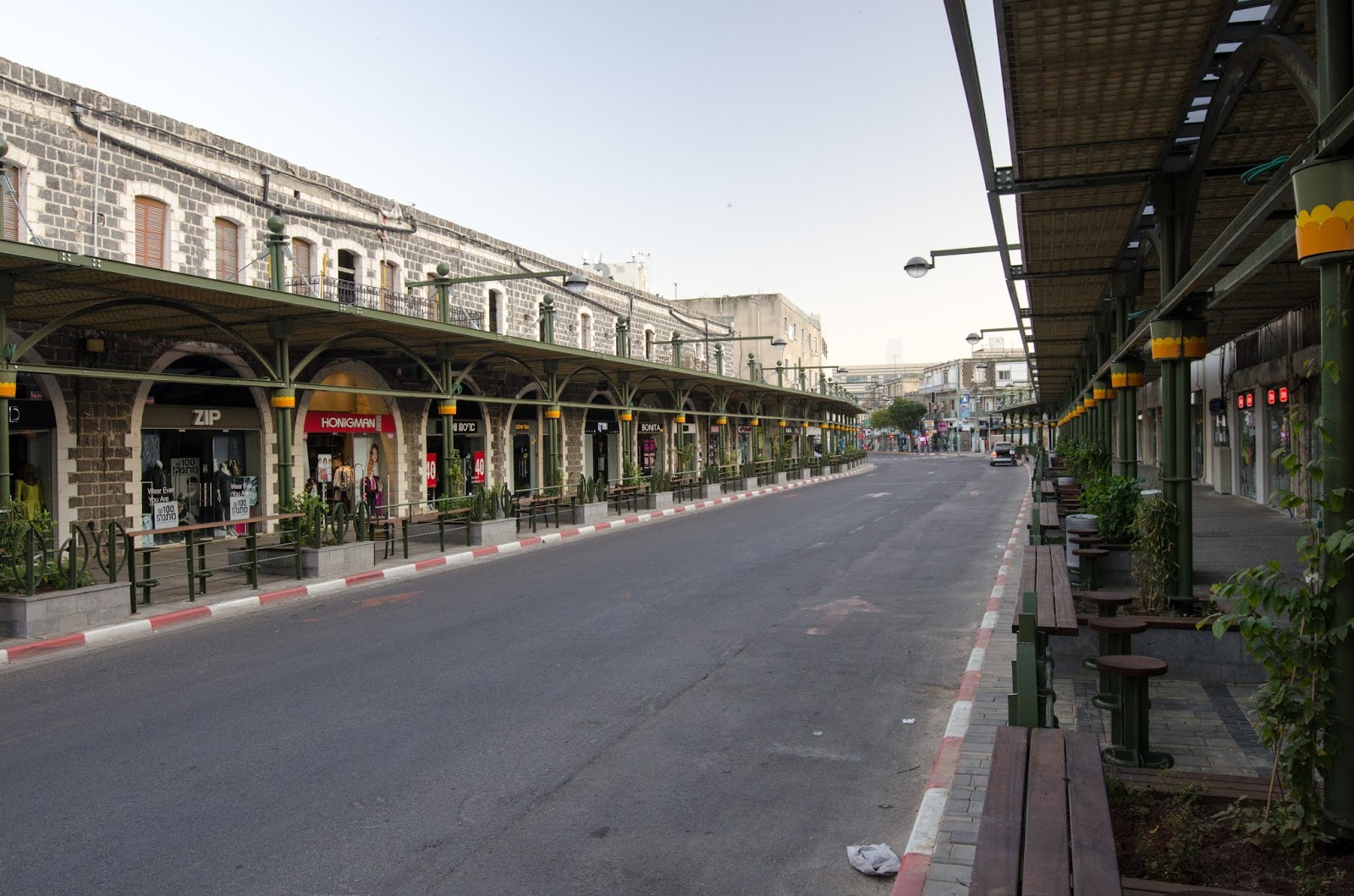
Sabbath in Modern Tiberius
One other comment before I close. Even good things need fallow seasons of pruning and rest in preparation for new seasons of fruitfulness. It makes me wonder since this current crisis is in effect imposing a sabbath rest on the land. While the imposition of a required sabbatical season is not the cause of this shutdown, perhaps that is how the Lord may use this terrible pandemic for good, if we will hope in him.
We are a nation that refuses to stop whatever it is that we are doing. Yet, being forced to stop, to pause, to trust it will work out, will we continue to be downcast, angry, fearful, and divided, or will our souls be counseled by this psalm to hope in God? Will we trust that we will once again join our voices together to praise Jesus for the salvation he brings to share? I hope so!
How we live and engage those we live with, will reveal both our heart and our source of hope… for better or worse!


[1] Peter C. Craigie, Psalms 1-50, Word Biblical Commentary Vol. 19, (Waco, TX: Word Inc., 1983) 325.