Showing posts with label Jesus Christ. Show all posts

Monday, August 17, 2026

Getting A Facelift, Not a Face Full (Psalm 119:22-24)

Photo by Andre Hunter on Unsplash 
The following post is a reflection on Psalm 119:22-24, which reads,

Take away from me scorn and contempt,
    for I have kept your testimonies.

Even though princes sit plotting against me,

    your servant will meditate on your statutes.

Your testimonies are my delight;

    they are my counselors. (ESV)

Since the psalms were the prayer vocabulary of Israel, this is a prayer that Jesus would have likely prayed, for he was faced with scorn and contempt on multiple occasions.


Have you noticed the faces of those who show scorn and contempt for others? They become ugly and distorted in the process of verbally vomiting their inner brokenness in an attempt to break others. 

Photo by Tom Caillarec on Unsplash

And frequently, when a person receives scorn and contempt, their own face falls into frowns of sadness, grimaces of pain, and may even become twisted in anger. How can we have a facelift in such circumstances? Remember Psalm 3:3-4,

But you, O Lord, are a shield about me,
    my glory, and the lifter of my head.

I cried aloud to the Lord,
    and he answered me from his holy hill. 

Photo by Dan Meyers on Unsplash 
God is the one who lifts our head and our face in answer to our prayer. In Psalm 119, verse 22 is likely a lament—a prayer request—asking that God would turn away the scorn and contempt being directed at the psalmist. This request is made in the context of his recognition that he was merely sojourning here on earth; he was not home yet (v. 19). This is God’s world, and as sojourners, we need to follow his testimonies. 

In his commentary on Psalm 119, Michael Wilcock wrote,

God’s people have always needed to be reminded of this. Every day we walk familiar roads; This is our hometown, our home country, we say. Yes and no, says God. This is my world, and you are here as garĂ®m, expatriates. ‘The land is mine, and you are but aliens and my tenants.’ [Lev. 25:23] That means you observe the laws and manners of your host country. We begin to see why the psalmist, a stranger on earth, cries, Do not hide your commands from me. He needs God's handbook for the duration of his residence in God's world.

What creates problems for him, and underlines his need of such a handbook, is the fact that though this really is God's world, there are plenty of people in it who do not behave as if it were (vv. 21-22). On all sides he sees the arrogant and the accursed, and their scorn and contempt for God's principles. He is bound to be affected, and fears being infected, by all this. He does not have to be abroad for rulers to slander him…[1]

I especially love his line about how we are to “observe the laws and manners of your host country.” While it is wise for us to do this at the human and international levels, few realize that this world doesn’t belong to independent people or even to nations; it belongs to the Lord God Almighty. Thankfully, the Lord and Creator is also our loving Heavenly Father!

However, it is also possible that this prayer could be more reflective than that. One of the dangers of law-keeping is that of judgmentalism directed towards those less spiritually mature. Do we need to ask God to take away the scorn and contempt that can rise in our hearts for those whom we consider offensively “other”? It is one thing to disagree with someone, but it is another to demonize and denounce them. Our 21st-century culture is highly charged, so every spoken reaction, every written statement, every posted opinion, may either attract or repel in an amplified way.

Photo by Adi Goldstein on Unsplash
I know that when I look at the behavior of those who hate God and his word, and hear the vain ideas that they would want to enforce upon others, it is not hard to turn their scorn and contempt back on their own heads with an ample dose of laughter. However, that is not likely to win them over to the truth. Jesus said we would be mocked, just as he was. He also challenged his followers not to show scorn and contempt for others.[2] This can be very difficult. We are culturally conditioned to retaliate at some point. However, the psalmist shows us that there is a way that we can limit the risk of our slipping into a scornful, contemptuous attitude. 

Did you notice? Psalm 119 is the longest in the Bible, and nearly every verse points us to the answer we need. In the three verses at the center of this post, we see the psalmist engaging God’s Word in obedience, diligent thought, and heartfelt delight.

v. 22b …for I have kept your testimonies.

v.23b …your servant will meditate on your statutes.

v.24 Your testimonies are my delight; they are my counselors.

It is when we keep, meditate, and delight in the Word of God that we see the personality of God revealed, and it changes us for the better. It is not so much learning the words on the page as it is meeting the one who waits on the other side of the page, for they all speak of Jesus Christ (e.g., Luke 24:27; Acts 28:23; Romans 3:21-26). 

Photo by ROBIN WORRALL on Unsplash 
Is there another testimony that I have committed myself to follow? Are there other ideas, values, and mission statements on which we focus our deepest thoughts? Have we allowed something, or someone, else to become our closest confidants, the ones who help to direct our lives, other than God’s Word? If so, then let this psalm be the light that patiently and persistently sets you back on the path.

Jesus can identify with us in our pain, for he endured terribly scornful mocking at the hands of Romans and Jews alike. He knew that his followers would also face the same treatment. In John 15:19-20, Jesus made this very clear to his followers.

If you were of the world, the world would love you as its own; but because you are not of the world, but I chose you out of the world, therefore the world hates you. Remember the word that I said to you: ‘A servant is not greater than his master.’ If they persecuted me, they will also persecute you. If they kept my word, they will also keep yours.

Not only should we not be surprised when we are on the receiving end of hateful and false speech, but Jesus also reminds us that, far from being a soul-crushing defeat, such undeserved treatment is, in fact, a spiritual blessing!

“Blessed are you when others revile you

                                  and persecute you

      and utter all kinds of evil against you

                                              falsely on my account.

Rejoice and be glad,

          for your reward is great in heaven,

                       for so they persecuted

         the prophets who were before you.” (Matt. 5:11-12)

Peter, who once thought of taking up a sword to defend the Lord against scorn and unjust arrest, finally came to understand the Lord’s way and wrote,

Finally, all of you, have unity of mind, sympathy, brotherly love, a tender heart, and a humble mind. Do not repay evil for evil or reviling for reviling, but on the contrary, bless, for to this you were called, that you may obtain a blessing. (1 Peter 3:8-9)

The one who meditates and delights in God’s testimonies will embody the qualities of verse 8 and receive the blessing of verse 9.

Let his words be our counselors! They do a better job than Botox!


[1] Wilcock, Michael, The Message of the Psalms, 199.

[2] In Matthew 5:22-23, Jesus forbids his followers from even calling others derogatory names out of anger. Paul wrote in Eph. 4:29-32, “Let no corrupting talk come out of your mouths, but only such as is good for building up, as fits the occasion, that it may give grace to those who hear. And do not grieve the Holy Spirit of God, by whom you were sealed for the day of redemption. Let all bitterness and wrath and anger and clamor and slander be put away from you, along with all malice. Be kind to one another, tenderhearted, forgiving one another, as God in Christ forgave you.”

Saturday, September 26, 2020

Psalm 44 The Cry of the Remnant

Photo: Greg K Dueker
Psalm 44 is almost like a microcosm of the entire book of Psalms. It is filled with statements of praise and remembrance, personal testimony, and national salvation history, as well as bitter lament and honesty, giving voice to the painful questions in the people's hearts. In that sense, it is highly relatable for many readers down through history who have known both the blessing of victory and the disgrace of adverse circumstances.

If we know the history of Israel in the Old Testament, we know that the only time that Israel’s armies were defeated in battle was when there was "sin in the camp”. God’s covenant with Israel was clear that if their hearts turned away to follow other gods then discipline would come, at the hands of other nations, to drive them back to the Lord their Deliverer. We see this pattern played out over and over. Eventually, God kept his promise to justly remove them from the land as a consequence of their constant wickedness as a nation.

But what about the faithful individuals who trusted the Lord despite the pressures of an ungodly culture? How did the prophets feel as they had to call an unresponsive nation to repentance? Overwhelmed, exhausted, discouraged, and even confused. In 1 Kings 19, Elijah fled the very real death threats against him from Queen Jezebel and lamented to God that he was the last servant of the Lord in the Northern Kingdom of Israel (19:10,14), but the Lord corrected Elijah’s emotional math. He was not alone,

Yet I will leave seven thousand in Israel, all the knees that have not bowed to Baal…” (19:18).

How encouraging that must have been for Elijah to hear. Many of those 7000 certainly would have been encouraged by the ministry of Elijah.

Psalm 44 powerfully captures the lament of the faithful remnant during a time of great suffering. As such, it is instructive for us when our circumstances don’t seem to line up with our understanding and expectations of the Lord’s steadfast love.

“A Nation Under God’s Delight”

Photo by Joanne Francis
on Unsplash
The first two stanzas of Psalm 44 form what I call the “Nation Under God’s Delight” section that recounts how God had first established Israel in the land in the distant past and also how God had shown his goodness to the psalmist himself. This section contains two parts, stories they had heard about and stories they had lived themselves.

Back in the Day—Stories They Had Heard (v. 1-3)

O God, we have heard with our ears,
     our fathers have told us,
what deeds you performed in their days,
     in the days of old:
you with your own hand drove out the nations,
       but them you planted;
  you afflicted the peoples,
       but them you set free;
for not by their own sword did they win the land,
    nor did their own arm save them,
but your right hand and your arm,
             and the light of your face,
    for you delighted in them.

This first stanza of the psalm warmly recalls the faith-building stories they had heard of how the Lord worked in previous generations to drive out the Canaanites and plant Israel in the land, as a gracious act of God’s delight for his people.

The psalmist humbly makes a point of giving all the credit to God and not keeping any for Israel. As I read this, I have to ask, how much credit are we giving to God today and how much are we keeping for ourselves? In an election cycle, all politicians take as much credit as they can and deny responsibility for anything negative. However, if we take credit for the good, we also need to take responsibility for the bad.

What is profound here is that he writes, "we heard with our ears, our fathers have told us, what deeds you performed in their days". The stories passed down were not the fathers bragging about their successes or regaling them with how great things were, instead their stories were focused on what God had done on their behalf. So, how are we doing with telling our own "God stories?” Is God the hero of the stories told, or are we? I confess that too often it is the latter.

We Experienced Your Deliverance—Stories They Had Lived (v. 4-8)

Photo by Keith Luke on Unsplash

The psalmist had not only heard stories of God’s works of deliverance in previous generations, he has experienced such moves of God himself. He had lived such stories and witnessed the God-wrought victories in his own lifetime and boldly testifies about them. He continues to recognize that anything which Israel had accomplished was through the work of the Lord himself. It is believed that this would have been the testimony of the godly king,

For not in my bow do I trust,
    nor can my sword save me. (v.6)

As a result, their testimonies of the victory that they had received from the Lord amounted to a national bragging on the Lord, as verse 8 makes clear,

“In God we have boasted continually,
and we will give thanks to your name forever.”

When I read this stanza, I ask, how can we boast more fully in God our King and Savior today? Rehearsing the power and presence of God in the past will help us trust him more amid our present situations. This was how the psalmist prepared his heart to process his current shame.

As I have noted previously, the psalmist, the king, and the people had a rich heritage of powerful deliverances at the hand of God on behalf of their ancestors, and a testimony that had continued in this vein of victory and triumph of trust.

But then things changed…

Their “2020” Arrived

Photo by Edwin Hooper on Unsplash
The rest of the psalm is an aching lament expressing the feeling that God had abandoned them. Such feelings are a fairly normal reaction for us when things go from good to bad. However, it is usually not an accurate assessment of the situation. Just as the Israel of Psalm 44 had become a “byword” so too has the year 2020. In the future, we will likely use 2020 as a byword for “a really messed-up time.”

So far, in 2020, we have seen a global pandemic and the resulting economic and educational downturns associated with the mandated shutdowns. We have seen people awakened to stand together and peacefully protest racial injustice. We have seen anarchists prone to riot sacrificing the livelihoods of others on the altar of their demands. Our region in the Pacific NW has also been swept with wind-driven wildfires and blanketed in smoke so thick it blots out the sun. Yet as bad as it seems here there are many places where the social and personal pain is far greater. I have heard intense reports from many countries including Italy, India, Iran, and Indonesia.

In Psalm 44, the psalmist’s context had experienced a complete reversal from good to terrible! Did this mean that God had left, or that his love had failed? This was an honest question from a burdened heart. That’s how they felt… and sometimes we might feel the same way. The lament section of the psalm contains three stanzas which we will examine in turn.

“But It Doesn’t Seem Like You Delight in Us” (v. 9-16)

Photo by Joanne Francis on Unsplash
What do we do when everything that seemed to be going great isn’t anymore? Have we grown so used to prosperity and comfort that we expect it or that we feel entitled to it?

Ancient Israel saw a more direct and immediate correlation between outward circumstances and the condition of the person’s/nation’s heart and actions before God. However, this is often not the case. Sometimes circumstances don’t line up and are not a result of any kind of personal sin. That’s why we have the book of Job in the Bible! Speaking of Job, this psalm is reminiscent of both the story and lament of Job who also didn’t understand why it felt like God was punishing him though he was innocent.

What do we do to process our internal dissonance in this 2020 time?

The psalmist presents a poetic list of how God had not shown them the same level of blessing the “the fathers” had received. In a list of six, “you have” statements, the full scope of their reversal is seen. It concludes this way,

You have made us a byword among the nations,
     a laughingstock among the peoples.
All day long my disgrace is before me,
    and shame has covered my face
  at the sound of the taunter and reviler,
    at the sight of the enemy and the avenger.
(v.14-16)

Photo by Ehimetalor Akhere Unuabona 
on 
Unsplash

Instead of being delivered and given land, they have lost everything. They had been defeated, despoiled, deported, devalued, despised, derided, and daily disgraced. To say the least, there is a great deal of spiritual/emotional dissonance being expressed in this psalm.

It might seem pretty bold to pin all this on the Lord as though accusing him of dereliction of duty, but the psalms give us both the permission and vocabulary, to be honest with God. Among other things, lament psalms process our feelings of disappointment, loss, and shame through the character of God. That is what we see here. There is a tone of deep grief over intense loss and intense frustration over the continued indignities that they were suffering.

“Our Heart has not Turned Back” (v. 17-22)

The community of the faithful then lists several “we have not” statements defending their innocence in answer to the previous stanza’s “you have” indictments of God’s care and describing an apparently withdrawn divine blessing. Where was God in all this?

While it may be true that the psalmist was faithful, and accurately represented the position of other faithful people, over the years I have observed that we tend to overestimate our faithfulness while underestimating God’s present work on our behalf.

If we trust in our own efforts, it should come as no surprise that we can't see God working on our behalf. Just saying!

At the same time, we need to recognize this is the cry of the remnant throughout history, for the godly will be opposed. Their lament in verse 22...

Yet for your sake we are killed all the day long;
    we are regarded as sheep to be slaughtered.

is quoted centuries later by the Apostle Paul in Romans 8 in an extended discussion of how nothing can separate us from “the love of God in Christ Jesus our Lord”, certainly not “tribulation, or distress, or persecution, or famine, or nakedness, or danger, or sword.” (See Romans 8:18-36)

In fact, it is this trust in the steadfast love of God that anchored the psalmist and the remnant community as they now ask the questions they can no longer refrain from asking.

Please Wake Up and Help! (v. 23-26)

Awake! Why are you sleeping, O Lord?
    Rouse yourself! Do not reject us forever!
Why do you hide your face?
    Why do you forget our affliction and oppression?
For our soul is bowed down to the dust;
    our belly clings to the ground.
Rise up; come to our help!
    Redeem us for the sake of your steadfast love!
 

They express their internal dissonance by asking three “why?” questions in rapid-fire style before concluding in prayer based on the faithful love of God that is working even when we can’t see it. We may never know the why behind what we face. But we can know the one who is with us in the midst, the one who promises that he will not leave us or forsake us (Hebrews 13:5).

This psalm started by affirming trust in the Lord and God's faithfulness in the past. Then it expressed their confusion and even anger at their currently being defeated...but they processed their emotions and thoughts through trust in God. Finally, the psalm ends with the prayer of v. 26 which is still our prayer today!

Rise up; come to our help!
    Redeem us for the sake of your steadfast love!

 His steadfast love is our only hope! And an amazing hope it is!

 For I consider that the sufferings of this present time are not worth comparing with the glory that is to be revealed to us. (Rom. 8:18) 

Monday, June 6, 2016

Psalm 31: “Into Your Hand”

It has been a long time, too long since I have written for this blog. My other blogs either for school (Compelled2) or for the church (Our Long View) have demanded all discretionary writing energy. Now I have the privilege, in this season, of doing some freelance writing on the life of David from 1 & 2 Samuel. This also affords me the opportunity to revisit the psalms and ponder the circumstances in David’s life that accompany their writing.

Psalm 31:1-5
1 In you, O Lord, do I take refuge;
    let me never be put to shame;
    in your righteousness deliver me!
Incline your ear to me;
    rescue me speedily!
  Be a rock of refuge for me,
        a strong fortress to save me!
For you are my rock and my fortress;
    and for your name's sake you lead me and guide me;
you take me out of the net they have hidden for me,
    for you are my refuge.
Into your hand I commit my spirit;
    you have redeemed me, O Lord, faithful God.


Comments:
While for the sake of this post, I will only be addressing the first five verses, I would encourage the reader to read this entire psalm, hearing three different voices as you do so. 
  • First, read it while listening to David speaking to God about of challenges and disappointments of his life’s journey. 
  • Second, read it while listening to the voice of Christ in his Passion Week culminating on the cross. 
  • Finally, hear the voices of the faithful martyrs mingling with our own as we seek to follow the example of trust set for us.
David’s Patient Voice
En Gedi, one place
where David hid from Saul
David’s life was full of situations where he might have written this psalm, yet it is not explicitly tied to any one of them. In a sense, it is a psalm for all seasons of need. John Phillips in his commentary, Exploring the Psalms, titles this psalm, “Life’s Ups and Downs.” That certainly covers David’s life. If we have read 1 Samuel 16-31 and 2 Samuel 15-20 then when we read Psalm 31 it is not hard to hear David voicing this prayer in a number of different contexts as he continually chose to surrender his fate into the hands of the Lord. This was especially true in terms of the timing and circumstances of David’s becoming king of Israel.
David did not ascend the throne by subtlety and strength but by surrender: “Into Thy hand I commit my spirit.” Because he was such a surrendered man, such a submissive man, God saw to it that he ascended the throne—and by power. But not by his own power!
...It was God’s power that preserved David during his fugitive years and God’s redeeming power that raised him to the throne.” (Phillips, Exploring the Psalms, Vol. 1, 234)

Jesus’ Passionate Voice
We know that Jesus quoted verse 5’s “Into your hand I commit my spirit” as he died on the cross (Luke 23:46). However, I am not sure that we take the time to consider the entire psalm in light of that fact. Patrick Henry Reardon in his book Christ in the Psalms wrote,
It is the prayer of “Jesus, the author and finisher of our faith, who for the joy that was set before Him endured the cross, despising the shame” (Heb. 12:2), speaking to His Father in the context of His sufferings and death. This psalm is part of his prayer of faith…
In this psalm, we enter into the sentiments and thoughts of Jesus in His sufferings. We see the Passion “from the inside,” as it were. [p.59]

As Evangelicals, sometimes we view the atonement too transactionally and not incarnationally enough. Jesus’ entire life was part of the atonement mission of God, not just the last few hours. In his approximately 33 years on earth, he redeemed every stage of human life from infancy to adulthood. As we listen to this psalm through the voice of Christ, we will see how much he identified with and experienced our condition. One verse might require a note of further explanation. The last part of verse 10 says,
“my strength fails because of my iniquity,
    and my bones waste away.”

We know that Jesus was tempted in every way like we are yet was without sin (Heb. 4:15), so how could this verse represent the prayer of Jesus? The Bible says that Jesus not only died for our sins but that he became our sin on the cross (2 Cor. 5:21). Taken in that context this line makes perfect sense.

Our Voice (in Perspective)
If the Lord is to be our rock and our fortress, leading and guiding us, and rescuing us from the hidden traps of the enemy (v.3-5) then it is contingent upon our confession of need and calling on him for help. The first two verses introduce David’s prayer at a time when he was oppressed by others.

 In you, O Lord, do I take refuge;
    let me never be put to shame;
    in your righteousness deliver me!
Incline your ear to me;
    rescue me speedily!
Be a rock of refuge for me,
    a strong fortress to save me!

It is my belief that we will sooner or later “be put to shame” unless we cry out to the Lord in prayerful dependence as did David. But if we make it our practice to keep talking to the Lord, trusting our lives into his hand, and allowing him to lead and guide us through all the circumstances of our lives. We are not immune to the sorrows of life, but we need not be alone or without hope. While at the time of David, there was no certain understanding of a resurrection and eternal life; because of the work of Christ, we have a more complete understanding and a broader application of this passage.

The psalmist sought (v.18) and received deliverance from death and trusted in the coming of such deliverance; Jesus, on the other hand, gave expression to the same statement of trust as he died. He anticipated not deliverance from death, but trusted God even in dying and death (a trust that was later fulfilled in resurrection). It is in light of the use of the psalm in the worlds of Jesus that its transformation for contemporary faith becomes clear. The psalmist prayed for life, for deliverance from death, and that is the psalm’s fundamental and legitimate sense. But in the context of resurrection faith, the psalm may also be used as a prayer in death, expressing trust and commitment to the life lying beyond the grave. [Craigie, WBC Psalms 1-50, 263]

I am comforted to know that Jesus not only knows what it is like to face unjust attacks, lies, and rumors but walks with us (by the Holy Spirit’s presence) when we face the same. May our voices echo those of David and Jesus as we pour out our hearts to the Lord, and trust everything of this life and the next to the God who is there for us!
“Into your hand I commit my spirit;
    you have redeemed me, O Lord, faithful God.”


Thursday, July 2, 2015

Psalm 26: King David vs.Jesus?

Let’s start by considering two very different passages of scripture, one from the Old Testament written by a king, and the other from the New Testament proclaimed as the message of the kingdom of heaven.

Psalm 26:1-3
1 Vindicate me, O Lord,
    for I have walked in my integrity,
    and I have trusted in the Lord without wavering.
Prove me, O Lord, and try me;
    test my heart and my mind.
For your steadfast love is before my eyes,
    and I walk in your faithfulness.

Matthew 5:1-3
“Seeing the crowds, he went up on the mountain,
and when he sat down, his disciples came to him.
And he opened his mouth and taught them, saying:
‘Blessed are the poor in spirit, for theirs is the kingdom of heaven.’”

How can we walk as King David claimed “in our integrity” and still be blessed as the “poor in spirit” or the “spiritually bankrupt” at the same time? Is it even possible for both to be true in us, or are these attitudes mutually exclusive? Or perhaps we just chalk it up to the differences due to progressive revelation from the mid-Old Testament to the early New Testament as is so often done and walk on by such issues.

Let’s be honest, sometimes King David’s claims in the Psalms seem almost arrogant and self-righteous at first glance…especially given our knowledge of his own personal and public failures. Certainly he was gifted with a completely honest approach to communicating with God and thus some of his statements may offend our more nuanced religious sensibilities. But before we are too hard on David, we need to get the log of self-promotion out of at least one of our own eyes. How often do we mentally make the same argument as David…that we deserve better? That we are not like “them”? That we have integrity in ourselves?

Let me say, in a stage-whisper aside, that it is in our corrupted nature to compare ourselves favorably with others. [Even those who despise themselves and compare themselves unfavorably to others do so with the thought that they should be better or have better in a kind of backwards pride—for if they really despised themselves then they would be happy that their life is miserable.]

We often don’t really feel the deep need for God to vindicate and redeem us because we either see no need for either vindication or redemption, or we are committed to vindicating ourselves. We think we are Superman rescuing our own lives from the gutters of both personal failures and religious superstitions. If God exists, then he must certainly accept us…but more often than not the spiritually confident live as though God

David’s request for God to “vindicate” him is actually a statement of humility. It demonstrates that he knows that he needs to be vindicated (to justify, maintain, support, defend, uphold, prove correct or right) and cannot deliver himself.

In the Expositors’ Bible Commentary Vol. 5, Willem A. VanGemeren writes, “Vindication is here the act of God whereby he declares his servant to be innocent and avenges himself of the wicked (false accusers, enemies).”[1] Note that vindication here is “the act of God” not the act of self-righteous humanity.

The integrity, to which David clung, was faithfully dependent upon the steadfast love and mercy of God (v.3). His integrity is seen in the coherence between his inner life of faith and his outward walk of faithfulness. He shunned everything that smacked of a lie or deceitfulness. He chooses not to enjoy the temporal benefits of those who oppress others. He has weighed the cost of following the Lord and does so with equal parts enthusiastic abandon steadfast endurance. So we see that to “walk in integrity” demands not perfection, but requires the honesty and humility to admit that we desperately need a gracious redeemer!

It has been said that “a life of faith” is one which serves a dream/mission so big that it requires God to miraculously bring it to pass or it is not a life of faith. If, in our integrity, we know that we need God to vindicate and redeem us and we put our whole-hearted hope in his doing so, then perhaps we are living by faith indeed as the “poor in spirit”.

Psalm 26, from which these verses are taken, is described as a psalm of entrance…that might have been used by the worshipper entering into the temple complex seeking both the clean hands and pure heart necessary to come before the presence of the Lord. The psalmist asked God to search and to test him, not because of an elevated sense of self-righteousness, but from the response of a heart captured by the steadfast love of the Lord! He wants to be able be in the presence of God.

He consciously distances himself from the oppressor and draws near to God in whom true freedom is found. For as Jesus said, “No one can serve two masters, for either he will hate the one and love the other, or he will be devoted to the one and despise the other. You cannot serve God and money.” (Matthew 6:24)  This psalm testifies that the psalmist was a “one master” kind of guy. To quote VanGemeren again, “The psalmist's concern with integrity, acts of devotion, and words of praise flows out of a heart filled with love for the Lord and for God's house. It is motivated by a zeal for the Lord.”[2] 

So can I say the same thing about myself? A couple of years ago, in commenting on this same passage, I wrote,
I hope that one day I will be able to look back and say with the psalmist that “I have trusted the Lord without wavering.” Yet I am not so sure that I want to ask the questions of God that David asks in v.2. But I wonder if it is possible to experience unwavering trust (v.1) without asking God to test us (v.2). Maybe the key is in verse 3…where I keep God’s steadfast love before my eyes (which makes it a lot easier to trust) and I live in his perfect faithfulness (not my own).

So we see that David’s integrity caused him to cry out to the Lord for redemption, vindication, and relational access to the Lord. Perhaps David is actually a pretty good case study in the blessedness of being poor in spirit.

What do you think?

This post is also published at Compelled2 my cultural engagement blog.


[1] Expositors Bible Commentary Vol. 8
[2] Ibid.

Wednesday, July 16, 2014

Psalm 15 "No Shirt, No Shoes, No Service?"

Psalm 15:1-2
O Lord, who shall sojourn in your tent?
    Who shall dwell on your holy hill?
He who walks blamelessly and does what is right
    and speaks truth in his heart...
 

Comments: I always call this “A psalm of Integrity”. Here the psalmist gives voice to the cry of God-seeking—but imperfect—people throughout history, “What do we need to do to live in God's presence?” or, to put it in New Testament terms, “…to be saved?" David gives a detailed list of that kind of person who can approach and be comfortable in a relationship with God. What a practical list of attributes and attitudes this psalm provides! 

As I would sum it up, the person who can dwell in the presence of God:
  •        Walks blamelessly
  •        Does what is right every time
  •        Speaks the truth in his heart (he doesn’t even lie to himself)
  •        Doesn’t slander with his tongue
  •        Does no evil to his neighbor,
  •        Doesn’t betray his friends
  •        Doesn’t look up to vile people
  •        He honors those who honor the Lord;
  •        Keeps his promises even when it hurts
  •        Doesn’t charge interest when helping others (not about what he gets out of it)
  •        Won’t lie, even when he needs the money (never profit over people).

There is just one problem—we don’t add up, neither did David…and he knew it. It was clear to David that his integrity depended on the lovingkindness of the Lord.

So what do we do in that moment of honesty, when we see God as he really is, and ourselves as we really are and feel suddenly under-dressed and disqualified? Such moments come rarely for those who in their pride and self-sufficiency sense no need. For others, feelings of unworthiness and the dirty rags of disgrace are the uniforms of their daily lives.

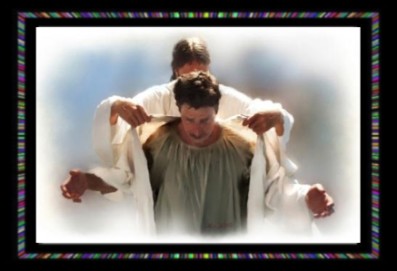
The person this psalm describes as having integrity in all areas of their life is a great example for us, but thankfully we don't have to "earn it" ourselves. We can’t presume to approach God in unrepentant sin. When you go to a wedding you wear wedding clothes (Matthew 22:11-12). Our sin must be dealt with, and our nakedness must be covered. Before the King, there can be no excuses, no explanation, and no argument. What we must do—while it is still today—is admit that we need “a wedding garment” befitting the invitation we have received and to trust Jesus to provide what we need.
I will greatly rejoice in the Lord;
    my soul shall exult in my God,
for he has clothed me with the garments of salvation;
    he has covered me with the robe of righteousness,
as a bridegroom decks himself like a priest with a beautiful headdress,
    and as a bride adorns herself with her jewels.
(Isaiah 61:10)

For us, as Christians, we are made worthy in Christ, not in our own efforts. Yet, if Jesus lives in us we will become more like him in our behavior as well. He came to serve, and such love transforms our hearts. It is Jesus' integrity that covers us, delivers us, gives us victory and enables us to dwell in the presence of a holy God as one who belongs there. 

We can’t hope to stand before the Lord in any kind of self-righteousness, but like the tax collector in Luke 18:9-15 who cried out, 'God, be merciful to me a sinner!' and went home justified. In putting his faith in the mercy of God, his righteousness exceeded that of the Pharisees. What about now? Do we have faith in Jesus' integrity on our behalf?
His divine power has granted to us all things that pertain to life and godliness, through the knowledge of him who called us to his own glory and excellence, by which he has granted to us his precious and very great promises, so that through them you may become partakers of the divine nature, having escaped from the corruption that is in the world because of sinful desire.” (2 Peter 2:3-4)

He gives us not only the needed shirt and shoes but all that we need for life and godliness…his very nature!