Showing posts with label Mercy. Show all posts

Friday, February 21, 2025

Psalm 59 Howling Like Dogs or Sharing the Love?

Over the years, in my devotionally commenting on this psalm, I have consistently focused on the final strophe (vv. 16-17) as my emphasis. I have posted these verses with my comments at least five times! So, in approaching this psalm today, I will intentionally discuss several other verses before hitting the well-trod landing zone in v. 17.

Who Let the Dogs Out?

Photo by Michael Ely, CC BY-SA 2.0, https://commons.
wikimedia.org/w/index.php?curid=13897885
This psalm starts as an individual lament with a prayer request that pulls up short of being fully imprecatory (v. 1-5). David claims his innocence, and at this point in his life, he was innocent of any wrongdoing. He had served God, the king, and the people of Israel bravely and faithfully, only to be canceled and nearly killed by the king’s jealousy. These specific enemies were persistent in their howling, prowling, and growling when they “don’t eat their fill” (v.15). The answer to the question of who let these dogs out is Saul. Still, they were seeking their own profit through treachery, which is never a good investment strategy. David asked the Lord to “punish all the nations,” not in general but sparing “none of those who treacherously plot evil” (v. 5).

What is the chorus of this psalm? What is the repeated phrase that acts as a bridge between sections? “Each evening they come back, howling like dogs and prowling about the city.” (v. 6, 14) The psalmist adds to the point by repeating that each evening “those who treacherously plot evil” (v.5) come back looking for trouble at his expense.

Sometimes our troubles...or those troubling people just do not ever seem to go away...coming back "each evening". Yet, like the psalmist, we can choose to sing of God's strength even when we feel we do not have any; of his steadfast love amid our trials!

Don’t you just love how, in the middle of being stalked by Saul's agents each night, David could still sing of God's strength? He knew that God would preserve him until the morning! Such faith in a loving God makes for a good night's sleep, no matter what is going on outside.

Photo by Gurth Bramall on Unsplash
I love dogs, but when the neighbors’ dogs' incessant barking wakes me from sleep in the
middle of the night or early in the morning, I find it highly irritating. Imagine that the metaphorical dogs are people saying bad things about you and trying to provoke you into an emotional response. Also, it helps us to understand the imagery used here when we realize that the dogs of ancient Israel were not house pets but dirty, skulking, sneaking, thieving creatures. In my mind, I compare them to pack hunters like hyenas and coyotes… loud at night, and we should not underestimate the damage they can do.

Famous Last Words

These human “dogs” came howling and bellowing rumors, slander, and lies about David. Why didn’t they fear that they might be held accountable for their words? Because they were practical atheists and in the employ of the king, they feared neither God nor man. As verse 7 describes.

There they are, bellowing with their mouths
    with swords in their lips—
    for “Who,” they think, “will hear us?”
(v.7)

Such words and boasts do not discomfit God, for indeed he laughs at the impotent self-deception. David set himself to watch for what the Lord would do negatively towards the bloodthirsty men and positively towards the faithful, summed up in verse 10,

My God in his steadfast love will meet me;
    God will let me look in triumph on my enemies.

David initially wanted them to be judged and brought down but not killed, lest his people forget (v.11), in a sense that may allude to Judges 2:21-23, where the other nations were not utterly destroyed but were used to discipline God’s people when they sinned. In this sense, David’s prayer extends beyond his immediate context to the plight of God’s people living in exile in a fallen world.

However, while David starts by not wishing for their death, the more he considers their lies and sinful words, the more worked up he gets. Let's read this section together…

Kill them not, lest my people forget;
    make them totter by your power and bring them down,
    O Lord, our shield!
For the sin of their mouths, the words of their lips,
    let them be trapped in their pride.
For the cursing and lies that they utter,
    consume them in wrath;
    consume them till they are no more,
that they may know that God rules over Jacob
    to the ends of the earth. Selah
(v. 11-14)

Photo by Resume Genius on Unsplash
We are currently living in a time where conversations with those who disagree with us are difficult, if not impossible. We have largely lost the ability to engage ideas, concepts, and policies reasonably, and too often settle for railing against the character of the other. The ad hominem attack has always been a logical fallacy, and though it has won some battles, it usually ends up losing the war.

While the wicked focus on loudly expressing their displeasure when they don’t get what they want, David models a posture of faithful worship even during perilous times. Despite his frustration at the mercenaries that surrounded his house looking to capture him for King Saul, David ended his psalm with this praise for God's hesed love, and continues to place his trust in the Lord...always the best decision!

So here is where I hit my customary landing zone in this psalm.

Photo by Cason Asher on Unsplash
But I will sing of your strength;
    I will sing aloud of your steadfast love in the morning.
For you have been to me a fortress
    and a refuge in the day of my distress.
O my Strength, I will sing praises to you,
    for you, O God, are my fortress,
    the God who shows me steadfast love. 
(v.16-17)

Singing out loud of YHWH’s steadfast love today! No matter what lurks at the door or prowls around the walls of our life, God's love is a fortress! Despite being falsely accused, persecuted, and even being hunted down, David chose to focus on God's strength and steadfast love. I wish I could do the same thing more consistently!

I pray that we will never be pride-trapped by our words to the point of denying the truth of our faith. May we be people who are honest to God, kind to others, and transformed by the steadfast love of God! 

Sunday, August 25, 2019

Psalm 41: Merciful, or Just Mean as a Snake?

Blessed is the one who considers the poor!
    In the day of trouble the Lord delivers him;
the Lord protects him and keeps him alive;
    he is called blessed in the land;
    you do not give him up to the will of his enemies.
The Lord sustains him on his sickbed;
    in his illness you restore him to full health. (41:1-3)

Photo by Shail Sharma on Unsplash
In Psalm 40, we saw the psalmist testify about the good that God had done for him, and we see that in Psalm 41 as well… in the person of the Lord himself and in the one who represents him well. 
     “Blessed is the one who considers the poor!” (v.1)
Here is a question... are verses 1b-3 a description of what God does for the poor or what God will do for the one who cares for the poor? Perhaps both. Willem Van Gemeren, in The Expositor’s Bible Commentary, notes that,
“The Father in heaven looks for those who wisely conform to his heavenly kingdom on earth: righteousness, holiness, love, and justice. He cares for the oppressed and delights to see his children's concern with the things that are important to him: concern for those in need (cf. 35:13-14; 112:9 –Emphasis mine).”[1]

We should also observe that David ended the previous psalm with the cry,
 As for me, I am poor and needy,
    but the Lord takes thought for me.
You are my help and my deliverer;
    do not delay, O my God! (40:17)

David might have been establishing a case whereby the Lord would do merciful things for him since he was also in need. It is also possible that he was emphasizing the importance for those who have power over the poor/weak/sick/powerless to use that power to help and not to harm. This idea may be supported by the title of this psalm in the Syriac which says, “It was a Psalm of David when he appointed overseers to take care of the poor.” (Adam Clarke)

This psalm seems to suggest that how we treat “the poor” in their day of trouble influences how we will be treated in our own day of trouble. Jesus picked up on this prophetic message (and others such as Psa. 18:25-26 and Micah 6:8) in the Sermon on the Mount when he said, "Blessed are the merciful for they shall receive mercy" (Matt 5:7). Later James, Jesus' half-brother and leader of the Jerusalem church, wrote that pure religion is evidenced in our treatment of “widows and orphans” and not just some abstract form of personal piety (James 1:27).

Nineteenth-century preacher Charles Spurgeon, in his classic Treasury of David, elaborated on how the faithful servants of the Lord are both relationally wise and merciful in their consideration of the poor, “They do not toss them a penny and go their way, but enquire into their sorrows, sift out their cause, study the best ways for relief, and practically come to their rescue; such as these have the mark of the divine favor plainly upon them…“The promise is not that the generous saint shall have no trouble, but that [they] shall be preserved in it, and in due time brought out of it.”[2]

Certainly, these verses depict the kindness and grace of God, shown to those who are “poor” a word that depicts the marginalized in every society on earth, but also in the Hebrew context that specially referred to those who were humble before the Lord, confessing the sin. In the New Testament, we see both aspects on the lips of Jesus in Matthew 5’s “poor in spirit” and Luke 6’s “poor” in an economic/power sense.

I am touched by the merciful kindness shown to "the poor" in verses 1-3 of this psalm. I am also disturbed by the contrasted meanness of others in verses 5-10  the malicious, the slanderers, the whisperers, the scandalmongers, the prognosticators, and the betrayers!
Have you ever been “visited” by such as these? David had...
And when one comes to see me, he utters empty words,
    while his heart gathers iniquity;
    when he goes out, he tells it abroad. (v.6)

Pigpen by Charles Schultz
I don’t want to be the “utterer of empty words” nor one with a heart that “gathers iniquity” like velour gathers lint. I don’t want to spread abroad the iniquity I gather like so much sticky pollen and dust due to the negative charge of a fallen world. Instead, I want to spread the goodness of God which I have received. God doesn’t want his people to be the spiritual/relational equivalents of the Peanuts character “Pigpen” whose very presence continuously broadcasts dirt and dust. I also don’t want to imagine the worst for others (v.7) even though we are often faced with the reality of it.

Photo by Elijah O'Donnell on Unsplash
How can we keep from being mean like those described in v. 5-10? I don’t think that too many people set out to speak hurtfully or even use mean words, but the less we listen to the heart of God and more to the selfishness and demands of the world we start to sound like those to whom we listen. I was in a man’s office recently and noticed that his bookshelves were covered in a thick layer of dust. It didn’t happen all at once, but a little bit at a time, so gradually that he had not noticed it. But when I walked in for the first time, I noticed it right away. It is not fun when the light of God’s Word is focused by the Spirit on some areas of our hearts that have become clogged with the dust and disease of selfish pride, but it is therapeutic for it leads us to confession and cleansing!

What else can we do? Having confessed our sins to God and asked for mercy and grace to speak the truth in love, always looking to build up rather than tear down, there are several other safeguards, I would suggest that will prevent us from becoming one of those odious individuals mentioned in v.5-6 that hurts others verbally. We can...

  1. Know that the Father, Son, and Holy Spirit delight in you! Jesus was prepared for his times of greatest testing by the knowledge of his Father's love (Matt. 3:16-17; 17:5). The triune God knows your flaws already and still delights in you! Publishing and critiquing the perceived faults of others does not enhance your standing before the Lord. It is not like playing “king of the hill” where we climb higher by pushing and throwing others lower. (--> Romans 5:6-11)
  2. Know that our enemy, whose very name means “Accuser”, will not have the last word. And when the accuser is silenced by the manifested love of God in Christ, let us not play “devil’s advocate” and take up his taunts against others for whom Jesus died. (--> Rev. 12:10-11; Romans 8:31-34)
  3. Know that we are secure in the loving presence of the Lord Jesus forever. We don’t have to be overcome with anxiety, insecurity, or discouragement at our own shortcomings. We are not called to climb up to heaven to win God’s favor, rather, he came down to us to set us free from all that brings guilt and shame! (--> Romans 8:14-17, 35-39)
  4. Know that our words quickly reveal the condition of our hearts. So, when we (or others) notice our words growing more caustic, impatient, and overly sarcastic, let it be like an early warning system that our heart is no longer responding to the lovingkindness of the Savior, but has begun to go astray to gather iniquity. (--> Matt. 15:1-20; 12:34; Mark7:1-23; Luke 6:45)
  5. Know that you will always need God’s help and make a practice of asking for it, as the psalmist models for us in Psalm 141:3-4,
     Set a guard, O Lord, over my mouth;
         keep watch over the door of my lips!
     Do not let my heart incline to any evil,
         to busy myself with wicked deeds
     in company with men who work iniquity,
         and let me not eat of their delicacies!

As recipients of great mercy, even before we knew we needed it, let us extend mercy to others though they may not know they need it too! But having received it they will be changed. May the Heavenly Father and Christ the Son, use us to pour his love into the thirstiest of hearts through the work of the Holy Spirit this week! 

And for those of us who face the hour or day of trouble may we embrace the Lord's delivering presence in and through it! 

"Blessed is the one who considers the poor!
    In the day of trouble the Lord delivers him..." (v.1)


[1] Willem A. Van Gemeren in EBC Vol. 5, Psalms—Song of Solomon, Zondervan. 325.
[2] C.H. Spurgeon, Treasury of David, Vol. 2 Psalms 27-52, Baker Books, Grand Rapids, 283-284.

Tuesday, January 10, 2017

21 Days of Prayer in Psalm 119 (Day #10)

Read Psalm 119:73-80

     “Request”

Let your steadfast love comfort me
    according to your promise to your servant.
Let your mercy come to me, that I may live;
    for your law is my delight. (v. 76-77)

This stanza is filled with the faith of the psalmist making an extended request of the Lord. If, as the psalmist believes, the Lord was one who had made and sustained him then the Lord was the one to ask for understanding. After acknowledging the affliction from the previous stanza he launches into a five-fold request translated using the word “Let” or “May” that indicates an openness/readiness/eagerness to God doing what God does so well. Where does he start? For what does he ask? He requests
  • Love—that God’s love would comfort him in his circumstances. (v.76) 
  • Mercy—that God in his mercy would not only spare his life but bring new life. (v.77) 
  • Justice—that God would humble the proud and those who accuse falsely (v.78). 
  • Witness—that God would give him the opportunity to testify to others of the goodness and faithfulness of God as revealed in his word, influencing the next generation for the Lord (v.74, 79)
  • Devotion—that his own heart might be whole and undivided in its dependence upon the Lord so that he might not become that which is shameful (v.80).
These requests are “according to the will of God” and thus we can with certainty expect to see them come to pass…in whatever circumstances we find ourselves.

“And this is the confidence that we have toward him, that if we ask anything according to his will he hears us. And if we know that he hears us in whatever we ask, we know that we have the requests that we have asked of him. (1 John 5:14-15)

Let’s pray for these kinds of requests this year…requests that don’t originate in our deceitful hearts but in the very heart of God for us!

O Lord, how we need understanding in a day filled to overflowing with foolish knowledge. We long to be comforted by your love and quickened by your mercy. We wait for your justice on the arrogant and pray that you would keep us from being counted among them. Lord, may your direct our lives so that we be favorable witnesses to your goodness and redemptive mission in the word, and may your Spirit of grace keep us close to your heart so that we may finish well the course you have set before us. We know that there is no way we can live blameless without making requests of you. Thank you for hearing us and supplying that which we need to be faithful. Amen

Thursday, October 8, 2015

Psalm 28: Judgment in 3-D--“Dragged off, Due Reward, Torn Down

Psalm 28:3-5
Do not drag me off with the wicked,
                                      with the workers of evil,
            who speak peace with their neighbors
                           while evil is in their hearts.
        Give to them according to their work
                      and according to the evil of their deeds;
        give to them according to the   work of their hands;
                                        render them their due reward.
       Because they do not regard the works of the Lord
                                               or the work of his hands,
                                he will tear them down
                                    and build them up no more.

This passage starts with the psalmist expressing his dependence on the mercy of God for deliverance, then turns toward prayer for the Lord to judge the wicked in the sure knowledge that God will do so, and by verse 6 he is once again praising God for answering his prayer.

Dragged Off (v. 3)
David's request, "Do not drag me off with the wicked" can only be depended on if we are not the same as the wicked workers of evil.  We should not be self-deceived into thinking that we can be wicked and not suffer the wrath of a holy and loving God. 
Marley & Marley in
A Muppet Christmas Carol
Verse three's use of the word "drag" reminds me of several scenes in the old Whoopi Goldberg' 1990 movie "Ghost."It powerfully depicted the moment when an evil person died and demons came up out of the sidewalk and dragged their screaming soul off to hell. It was a graphic and memorable image in the midst of an otherwise forgettable movie. A more wholesome illustration is the scene from the Muppet Christmas Carole in which the Marley brothers appear to Scrooge...wrapped in the chains of their own misdeeds and warn him to repent. David's request to not be dragged off was not a request for an exception in God's justice, but a poetic commitment to follow in the ways of the Lord by faith.

God is our saving refuge, our shepherd! To paraphrase Romans 8:37-39, nothing can drag us away from his love. Similarly, Jesus made it clear that if we hear and respond to his voice, none can snatch us from his hand! As it is written,

My sheep hear my voice, and I know them, and they follow me. I give them eternal life, and they will never perish, and no one will snatch them out of my hand. My Father, who has given them to me, is greater than all, and no one is able to snatch them out of the Father's hand. (John 10:27-29)

Due Reward (v.4)
The Lord’s cycle of reward and recompense is sure…though it may not come full circle in this life. What remains will be settled completely in the next. This reward (or recompence in this case) is just because it is “according to”. God will match his response to the person “according to” the three synonymous phrases “their work”, “the evil of their deeds”, and “the work of their hands”, the bill of sin is due and judgment will come.

However, if we think we can approach God and demand justice to be meted out we may be setting ourselves up for a fall since what we need personally is mercy. Our own righteousness is insufficient and we can only fall before a holy God and ask for forgiveness. Jesus taught that “Blessed are the merciful for they shall receive mercy.” (Matthew 5:7) However, those who refuse the mercy of God and show no mercy to others but instead oppress and abuse them will receive their due reward. It will not be one that anyone in their right mind wants to collect and in fact, many spend their life self-medicating in an effort to forget for another hour that such a judgment is coming. It is so much easier to cry out to God like David did and allow God to call forth the response of faithful love in our hearts.


So should we advocate for justice? Absolutely. However the justice we should work for as flawed human beings is restorative rather than retributive. It is not our place to condemn others to an eternal fate but to call them to repentance. It is a merciful justice that advocates for mercy to be extended to those who are oppressed and marginalized by the selfishness of our society.

Downward Destruction (v.5)
God will not regard the work of the wicked and proud person but will oppose it. Verse 5 says,
      Because they do not regard the works of the Lord
                                                or the work of his hands,
                                he will tear them down
                                    and build them up no more.

There are some people who don’t value what God has created, sustained, and redeemed. They deny the existence (or at least the relevance) of God in the creation of the universe. They mock the redemptive work of God in the lives of former sinners. Their actions, attitudes, and words work to tear down what God has raised from the dust. But God will finally respond in kind by opposing their work and tearing it down.

Throughout ancient history, we can see God tearing down empires, nations, and social structures that do not regard his works: Babel, Egypt, Canaan, Assyria, Babylon, Persia, Greece, Rome, and even Israel at times. Is it not still the way of things...that oppressive regimes are judged as God raises up a justice movement from within or by other nations from without? 


While it is easy to see the sin in the lives of other individuals, other churches, other cities, and other countries, we need to take a second look at our own lives, etc., and make sure that we approach God and others in the humility of faith and the purity of merciful justice.

Clothe yourselves, all of you, with humility toward one another, for “God opposes the proud but gives grace to the humble.” Humble yourselves, therefore, under the mighty hand of God so that at the proper time he may exalt you, casting all your anxieties on him, because he cares for you. (1 Peter 5:5b-7)

If we don't then we will collectively be at risk of receiving the kind of message from God that Pharaoh once did.

Locust Swarm in Australia
So Moses and Aaron went in to Pharaoh and said to him, “Thus says the Lord, the God of the Hebrews, ‘How long will you refuse to humble yourself before me? Let my people go, that they may serve me. For if you refuse to let my people go, behold, tomorrow I will bring locusts into your country, and they shall cover the face of the land, so that no one can see the land. And they shall eat what is left to you after the hail, and they shall eat every tree of yours that grows in the field, and they shall fill your houses and the houses of all your servants and of all the Egyptians, as neither your fathers nor your grandfathers have seen, from the day they came on earth to this day.’” Then he turned and went out from Pharaoh. (Exodus 10:3-6)

If we lift ourselves up then God in his love will bring us down, and if we are low in our own eyes then God will lift us up…higher than we would ever have imagined. We can trust him with our lives! And in that trust, we will pursue justice on behalf of others.


Wednesday, May 20, 2015

Psalm 25 Remembered Mercy, Forgotten Sins

I have posted commentary on parts of this psalm five times over the years but this is my first blog post on Psalm 25. For followers of this blog, you know I have been stuck on 25 for a long time while my writing time was directed elsewhere. Here are more than a few verses from Psalm 25 that I am considering in this season...
 
Remember your mercy, O Lord, and your steadfast love,
    for they have been from of old.
Remember not the sins of my youth or my transgressions;
    according to your steadfast love remember me,
    for the sake of your goodness, O Lord!
Good and upright is the Lord;
    therefore he instructs sinners in the way.
He leads the humble in what is right,
    and teaches the humble his way.
10 All the paths of the Lord are steadfast love and faithfulness,
    for those who keep his covenant and his testimonies.
 
The psalmist recognizes not only his own need for mercy but that the Lord is the only one who can provide it. He asks no less than three times for forgiveness in this psalm. Spiritually, the psalmist is humbling himself in this manner, admitting that he needs forgiveness from God as well as deliverance from his enemies. So what about us? Will we learn from the Lord in humility or continue on in our pride? No one else can say that “all their paths…are steadfast love and faithfulness” like God can. If we are honest with ourselves and not totally clueless we must admit that we all have a history that needs to be forgiven, a litany of stuff we are not proud of. I recently told my students that, “demanding law for others and grace for ourselves is the first sign of self-deception.”
 
The end of Psalm 25 continues to resonate with Israel’s cry for deliverance in Egypt, from oppression so deep and so intense that we can hardly imagine it in the comfort of the west. Where it is said that,
 
"God heard their groaning and He remembered His covenant with Abraham, with Isaac and with Jacob.  So God looked on the Israelites and was concerned about them." (Exodus 2:24-25)
 
When God remembers, it is not like he forgot, but it is the moment when he manifests his loving character into the circumstances of his people. Will we look to him to remember us in our situation? Psalm 25 continues... 
 
15 My eyes are ever toward the Lord,
    for he will pluck my feet out of the net.
16 Turn to me and be gracious to me,
    for I am lonely and afflicted.
17 The troubles of my heart are enlarged;
    bring me out of my distresses.
18 Consider my affliction and my trouble,
    and forgive all my sins.
19 Consider how many are my foes,
    and with what violent hatred they hate me.
20 Oh, guard my soul, and deliver me!
    Let me not be put to shame, for I take refuge in you.
21 May integrity and uprightness preserve me,
    for I wait for you.
22 Redeem Israel, O God,
    out of all his troubles.
 
 
What do we do in times of trouble? Do we pray first? The psalmist advocates for God to redeem Israel, not just from the guilt of sin but from the “causeless hatred” of man that always seeks to tear down.
Rabbi Johanan said: "What was the cause of the first destruction of Jerusalem? Idolatry. And of the second destruction? Causeless hatred." He continues by explaining that causeless hatred "is more grievous than idolatry." '['The Babylonian Talmud, Tractate Kallah Rabbati 54b]

Much could be said in response to the quote above. I think the Rabbi spoke of more than even he knew. However, I would like to just briefly address v. 15 which reminds me of the person today who may be stuck in whatever trap of “causeless hatred” that has been set for him/her be it physical, economic, or spiritual, and who have no hope of extricating themselves. Can you picture yourself in the midst of a minefield or stepping on the tripwire to an IED where if you move it will go off? Something that we can’t free ourselves from is the consequences of sin (ours or another’s). David was in a situation like that…feeling and actually being ambushed on so many levels. In those situations, he trusted that the Lord was the only one who could rescue him…whether from external enemies or internal ones (sins). And, the Lord is trustworthy—Jesus said,
 
I am the door. If anyone enters by me, he will be saved and will go in and out and find pasture. The thief comes only to steal and kill and destroy. I came that they may have life and have it abundantly. I am the good shepherd. The good shepherd lays down his life for the sheep. (John 10:9-11)
 
Jesus set us free taking the blast for us…and he is no less committed to our life today than he was then!
 
As my son’s unit returns from a year’s deployment in Afghanistan, I thank the Lord for his answered prayer. He has guarded and he has delivered. In this case, delivered all the way back to Oregon. Thanks be to God, for He is faithful!

Wednesday, July 16, 2014

Psalm 15 "No Shirt, No Shoes, No Service?"

Psalm 15:1-2
O Lord, who shall sojourn in your tent?
    Who shall dwell on your holy hill?
He who walks blamelessly and does what is right
    and speaks truth in his heart...
 

Comments: I always call this “A psalm of Integrity”. Here the psalmist gives voice to the cry of God-seeking—but imperfect—people throughout history, “What do we need to do to live in God's presence?” or, to put it in New Testament terms, “…to be saved?" David gives a detailed list of that kind of person who can approach and be comfortable in a relationship with God. What a practical list of attributes and attitudes this psalm provides! 

As I would sum it up, the person who can dwell in the presence of God:
  •        Walks blamelessly
  •        Does what is right every time
  •        Speaks the truth in his heart (he doesn’t even lie to himself)
  •        Doesn’t slander with his tongue
  •        Does no evil to his neighbor,
  •        Doesn’t betray his friends
  •        Doesn’t look up to vile people
  •        He honors those who honor the Lord;
  •        Keeps his promises even when it hurts
  •        Doesn’t charge interest when helping others (not about what he gets out of it)
  •        Won’t lie, even when he needs the money (never profit over people).

There is just one problem—we don’t add up, neither did David…and he knew it. It was clear to David that his integrity depended on the lovingkindness of the Lord.

So what do we do in that moment of honesty, when we see God as he really is, and ourselves as we really are and feel suddenly under-dressed and disqualified? Such moments come rarely for those who in their pride and self-sufficiency sense no need. For others, feelings of unworthiness and the dirty rags of disgrace are the uniforms of their daily lives.

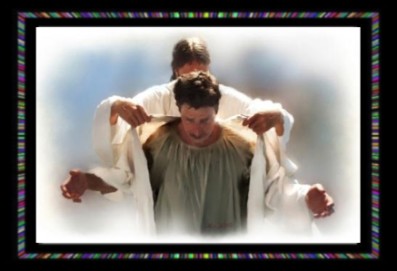
The person this psalm describes as having integrity in all areas of their life is a great example for us, but thankfully we don't have to "earn it" ourselves. We can’t presume to approach God in unrepentant sin. When you go to a wedding you wear wedding clothes (Matthew 22:11-12). Our sin must be dealt with, and our nakedness must be covered. Before the King, there can be no excuses, no explanation, and no argument. What we must do—while it is still today—is admit that we need “a wedding garment” befitting the invitation we have received and to trust Jesus to provide what we need.
I will greatly rejoice in the Lord;
    my soul shall exult in my God,
for he has clothed me with the garments of salvation;
    he has covered me with the robe of righteousness,
as a bridegroom decks himself like a priest with a beautiful headdress,
    and as a bride adorns herself with her jewels.
(Isaiah 61:10)

For us, as Christians, we are made worthy in Christ, not in our own efforts. Yet, if Jesus lives in us we will become more like him in our behavior as well. He came to serve, and such love transforms our hearts. It is Jesus' integrity that covers us, delivers us, gives us victory and enables us to dwell in the presence of a holy God as one who belongs there. 

We can’t hope to stand before the Lord in any kind of self-righteousness, but like the tax collector in Luke 18:9-15 who cried out, 'God, be merciful to me a sinner!' and went home justified. In putting his faith in the mercy of God, his righteousness exceeded that of the Pharisees. What about now? Do we have faith in Jesus' integrity on our behalf?
His divine power has granted to us all things that pertain to life and godliness, through the knowledge of him who called us to his own glory and excellence, by which he has granted to us his precious and very great promises, so that through them you may become partakers of the divine nature, having escaped from the corruption that is in the world because of sinful desire.” (2 Peter 2:3-4)

He gives us not only the needed shirt and shoes but all that we need for life and godliness…his very nature! 


Saturday, August 31, 2013

Psalm 143 "Sitting in Darkness"

Psalm for Today = 143:1-4
1 Hear my prayer, O Lord;
    give ear to my pleas for mercy!
    In your faithfulness answer me, in your righteousness!
Enter not into judgment with your servant,
    for no one living is righteous before you.

For the enemy has pursued my soul;
    he has crushed my life to the ground;
    he has made me sit in darkness like those long dead. 
Therefore my spirit faints within me;
    my heart within me is appalled.

Comments:
This psalm of David is classified as an Individual Lament; individual because it is written in the 1st person singular (me, my, I) and a lament, not because it is sad or mourning, but because it is asking God for something. There was a situation in the life of the psalmist that needed the intervention of the Lord.

What impressed me this morning as I was reading was not David’s request for help but his confession that “no one living is righteous before you”(v.2). As Christians, we are quick to quote Romans 3:23’s “for all have sinned” and move on. Yet I wonder if we really believe that we are sinners who stand no chance of talking, explaining, or bluffing our way into eternity. Surely if God were to judge between us and our enemies, we would be justified — right? No, we are all unable to stand should God enter into judgment with us…no matter our nation, race, culture, or socio-economic class. We are no better than any other in this respect.

1 John 1:8-9 says, If we say we have no sin, we deceive ourselves, and the truth is not in us. If we confess our sins, he is faithful and just to forgive us our sins and to cleanse us from all unrighteousness.”

David understood confession. He also understood how his enemies had impacted his life. In poetic language, he describes the darkness in which he was forced to live. How Jesus changes this! While our physical circumstances may not be changed immediately, Jesus came to minister to those in darkness. As we see in the Gospels,

Matthew 4:15-17 [Isaiah 9:1-2]
15 “The land of Zebulun and the land of Naphtali,
    the way of the sea, beyond the Jordan, Galilee of the Gentiles—
16 the people dwelling in darkness
    have seen a great light,
and for those dwelling in the region and shadow of death,
    on them a light has dawned.”
    the way of the sea, beyond the Jordan, Galilee of the Gentiles—
16 the people dwelling in darkness
    have seen a great light,
and for those dwelling in the region and shadow of death,
    on them a light has dawned.”
17 From that time Jesus began to preach, saying, “Repent, for the kingdom of heaven is at hand.”

John 1:9-13 
“The true light, which gives light to everyone, was coming into the world. 10 He was in the world, and the world was made through him, yet the world did not know him. 11 He came to his own, and his own people did not receive him. 12 But to all who did receive him, who believed in his name, he gave the right to become children of God, 13 who were born, not of blood nor of the will of the flesh nor of the will of man, but of God. 

Are we a zombie nation, or does our heart condition appall us? Will we confess our need to the Lord? Will we admit our guilt and unworthiness? Will we receive the true light, Jesus Christ’s gift of salvation, or will we sullenly choose to continue sitting “in darkness like those long dead”?

We all need to hear and heed the words of Jesus,
       “Repent, for the kingdom of heaven is at hand.”